TOP 22 Things To Do in Hanoi for First Time Visitors (2026)
Hanoi honestly caught us completely off guard, and I mean that in the best possible way. Before we arrived, I had a rough idea of what to expect: old temples, street food, motorbikes everywhere, maybe a lake or two. What I didn’t expect was just how layered and alive this city actually is, or how quickly it would grow on us.
Waseem and I only had four days in Hanoi, and honestly, two of those we spent in Ninh Binh, so our actual time in the city was shorter than I would have liked. But even with just two days, Hanoi managed to completely win us over.
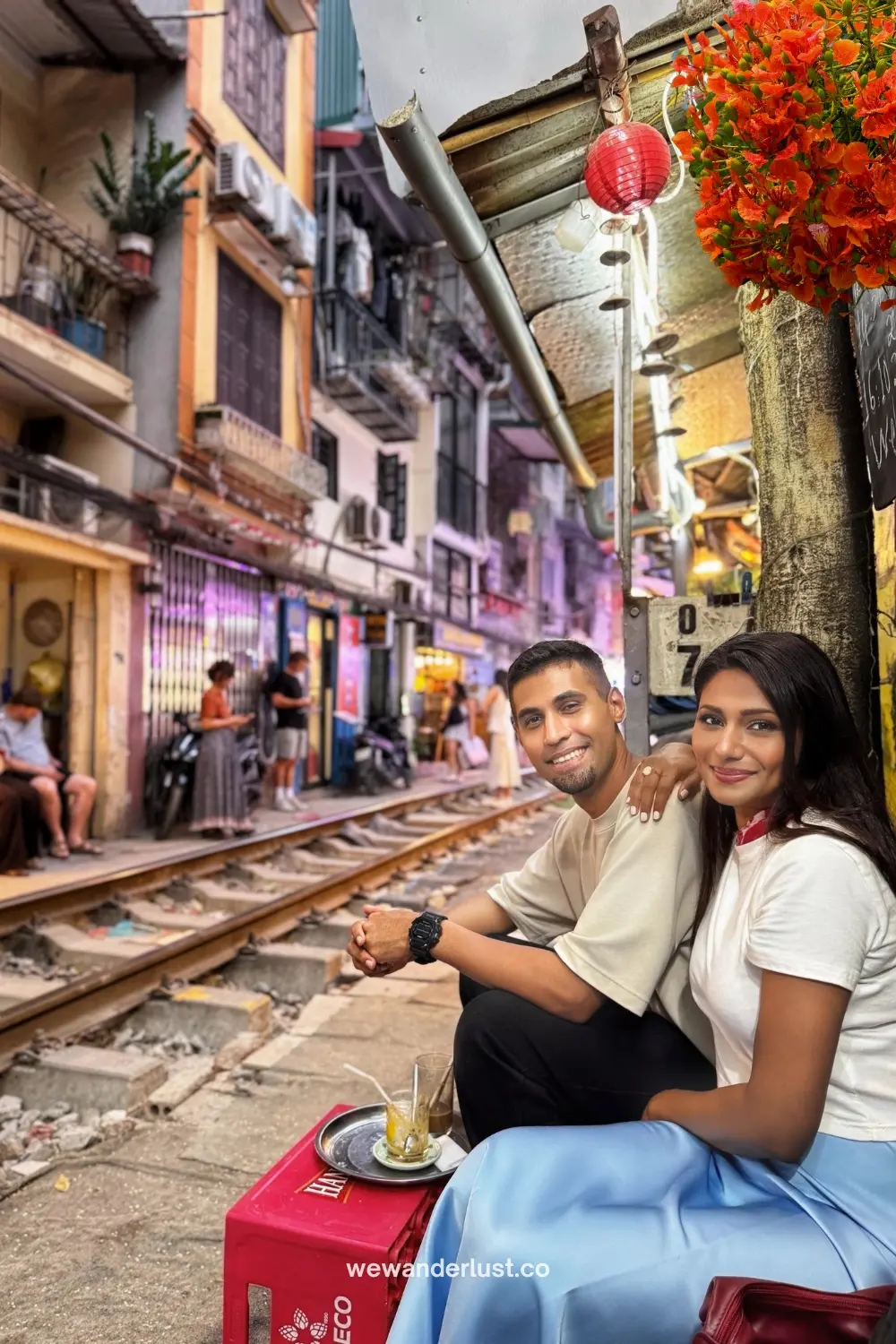
We spent one afternoon sipping the most incredible egg coffee on Train Street with a train barreling past inches from our table, stumbled onto a hidden mural street we nearly walked straight past, and ended up completely lost in the Old Quarter by evening, following our noses from one street food stall to the next. Honestly, that last part was one of the best decisions we made.
This things to do in Hanoi guide is everything we discovered, the highlights that absolutely lived up to the hype, a few local gems that most tourists completely miss, and a couple of honest takes on what’s worth your time and what you can probably skip. If you’re planning your first trip to Hanoi, this is the guide I wish we’d had before we went.
Short on Time? Here Are Our Favorite Hotels in Hanoi Vietnam
⭐️⭐️⭐️Peridot Grand Luxury Boutique Hotel – Click here for rates and availability
⭐️⭐️Hotel Du Palace – Click here for rates and availability
⭐️Hanoi Golden Hotel – Click here for rates and availability
Hanoi Things to Do: Our Experience
We based ourselves in the Old Quarter for our time in Hanoi, which turned out to be exactly the right call. Everything we wanted to see was walkable, and we loved just stepping outside and letting the city take us wherever it wanted to go.
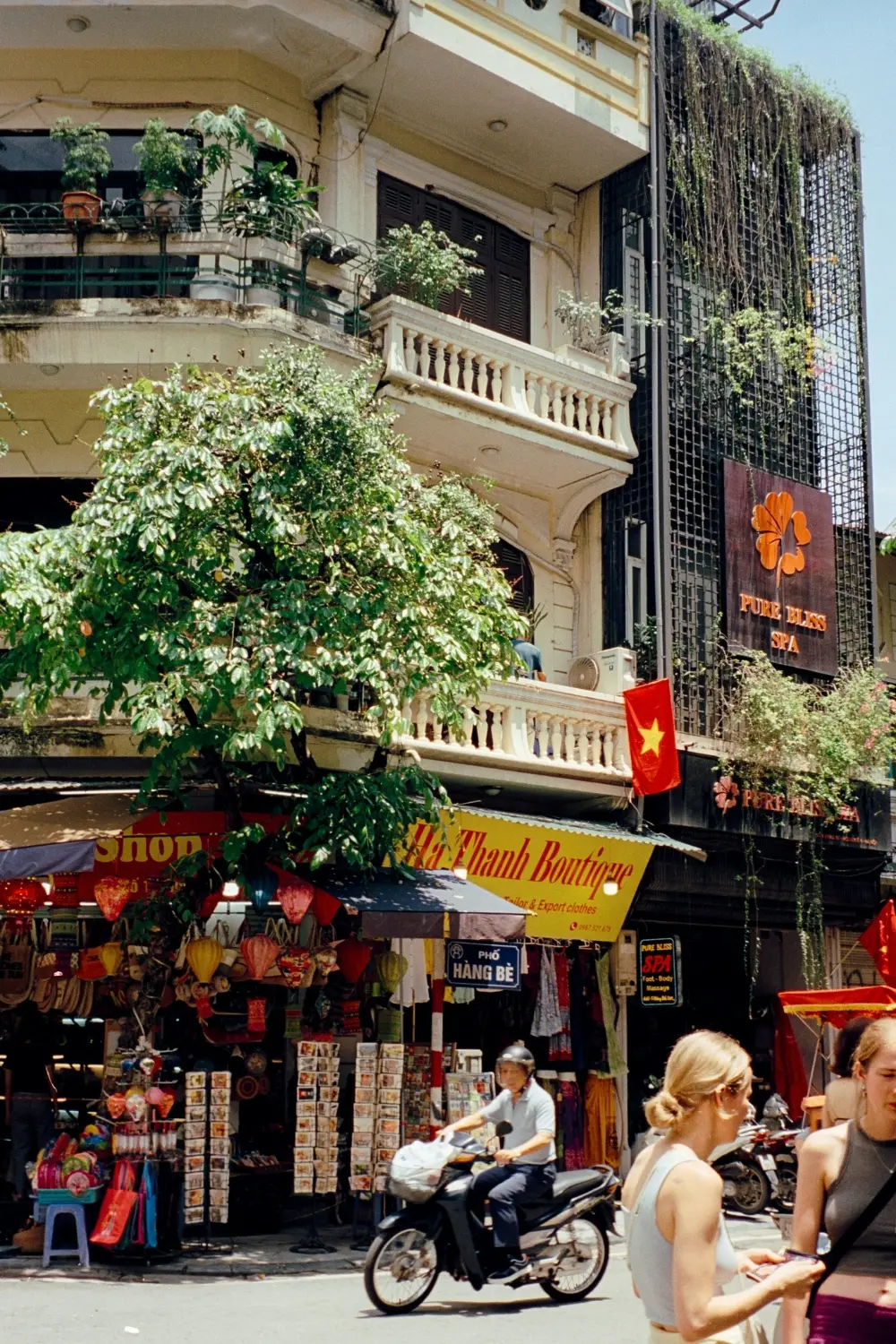
Hanoi has a very different energy from other Southeast Asian capitals we’ve visited. It’s not as relentlessly modern as Bangkok, not as sleepy as some of the smaller cities in the region. It sits in this fascinating middle ground, ancient in places, full of French colonial architecture in others, and somehow chaotic and charming all at once.
Crossing the road alone is an experience that takes a little getting used to (the trick, as locals will tell you, is to walk slowly and steadily and let the motorbikes flow around you like water), but once you find your footing, Hanoi is incredibly fun to explore on foot.
One of the things I appreciated most is how affordable everything is. A bowl of pho for breakfast costs almost nothing. Egg coffee at a rooftop cafe costs almost nothing. Even the entrance fees for most temples and historic sites are incredibly reasonable. It’s the kind of city where you can do and eat so much without watching your budget too carefully, which made exploring it feel like a real treat.
We didn’t get to absolutely everything on this list during our visit, and I’ll be honest about that where it’s relevant. But we covered a lot of ground, and the things we didn’t personally experience are here because the evidence for their value is just too strong to leave out.
Grab our FREE Google Map of Hanoi! We’ve pinned all our favorite spots and hidden gems so you can spend less time planning and more time exploring.
Best Things to Do in Hanoi Vietnam
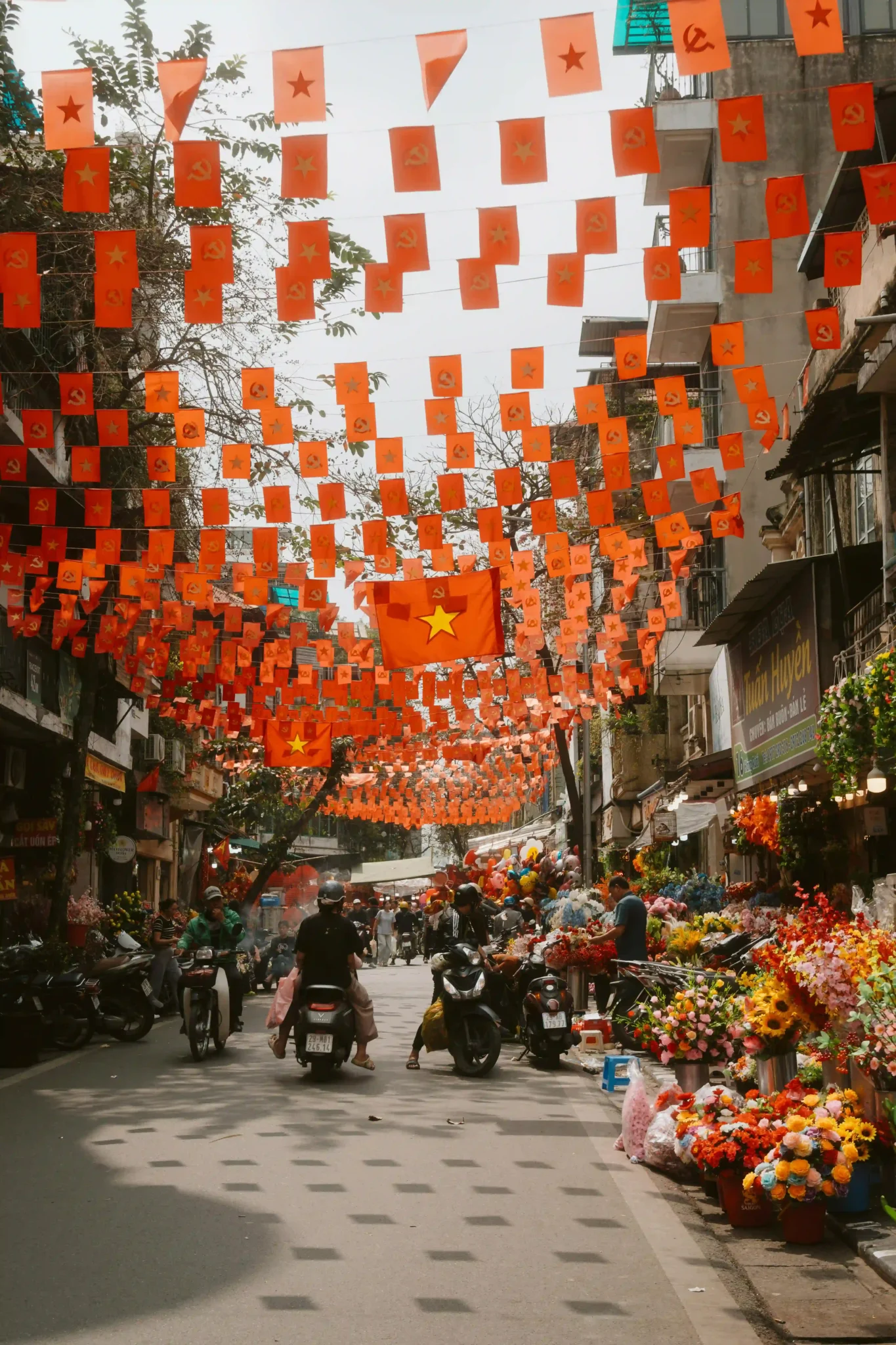
Explore Hanoi Old Quarter
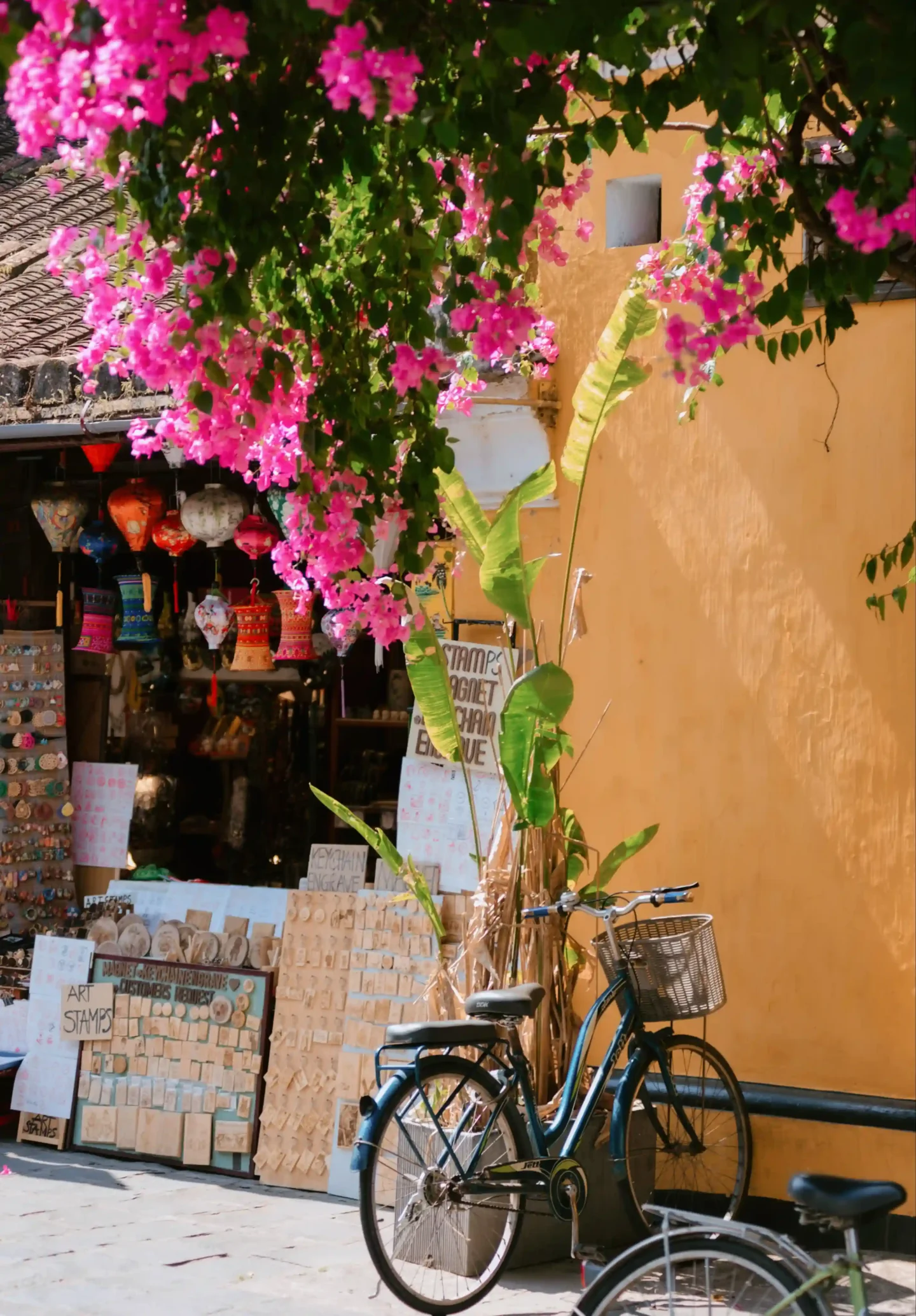
If there’s one thing you absolutely cannot skip, it’s the Hanoi Old Quarter. This is the beating heart of the city, a maze of narrow streets that have been organized by trade for centuries: one street for silk, one for paper, one for tin, one for bamboo, and so on. Walking through it feels like stepping back into a version of the city that has barely changed despite the centuries rolling by.
We spent hours just wandering here without any plan at all, and it was one of the highlights of our entire trip. Tiny alleyways open up into bustling squares, street food vendors appear at every corner, and there’s always something happening, whether it’s a market, a performance, a group of locals playing chess on the pavement, or a motorbike squeezing through a gap that honestly shouldn’t be possible.
Just a short walk away from the Old Quarter sits the French Quarter, which is a completely different vibe and well worth a stroll through. The wide tree-lined boulevards, the grand colonial architecture, the Hanoi Opera House lit up in the evening: it feels like a completely different city, and the contrast between the two makes both areas even more interesting to explore.
One practical tip: the streets around Hoan Kiem Lake are closed to traffic on Friday, Saturday, and Sunday evenings, which turns the whole area into a pedestrian walking street. It is one of the best times to explore the Old Quarter since you can wander freely without watching for motorbikes every five seconds.
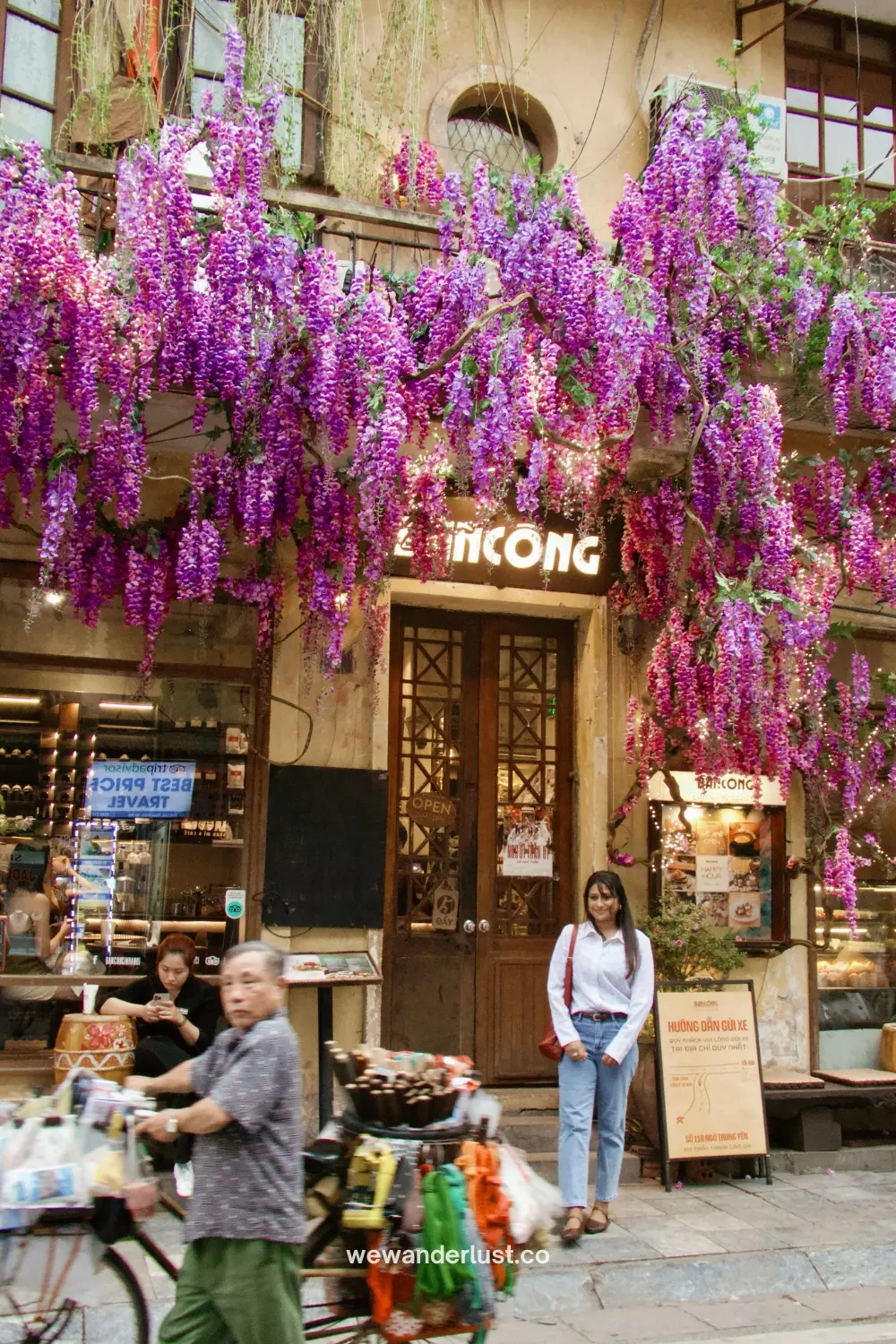
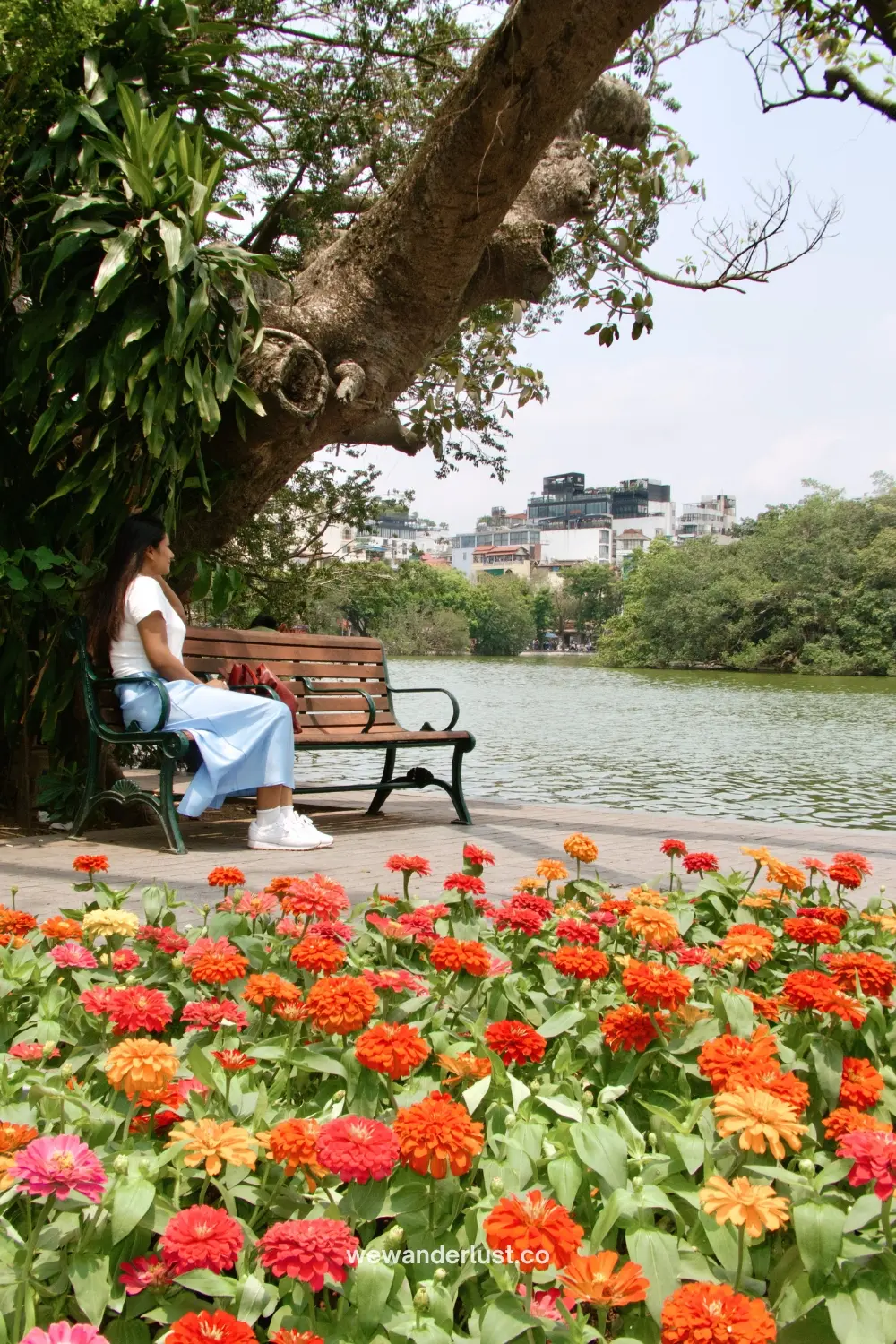
Walk Around Hoan Kiem Lake
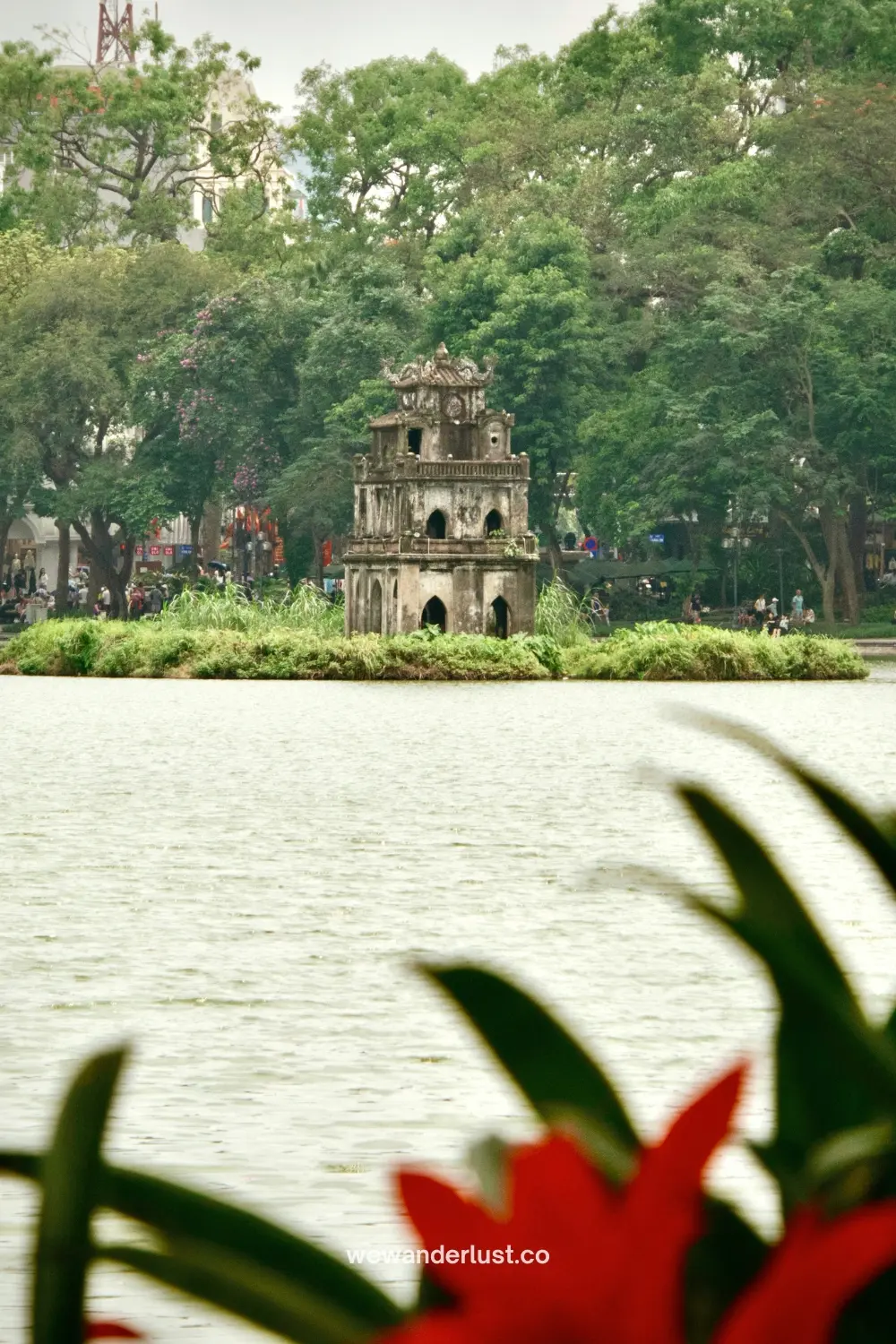
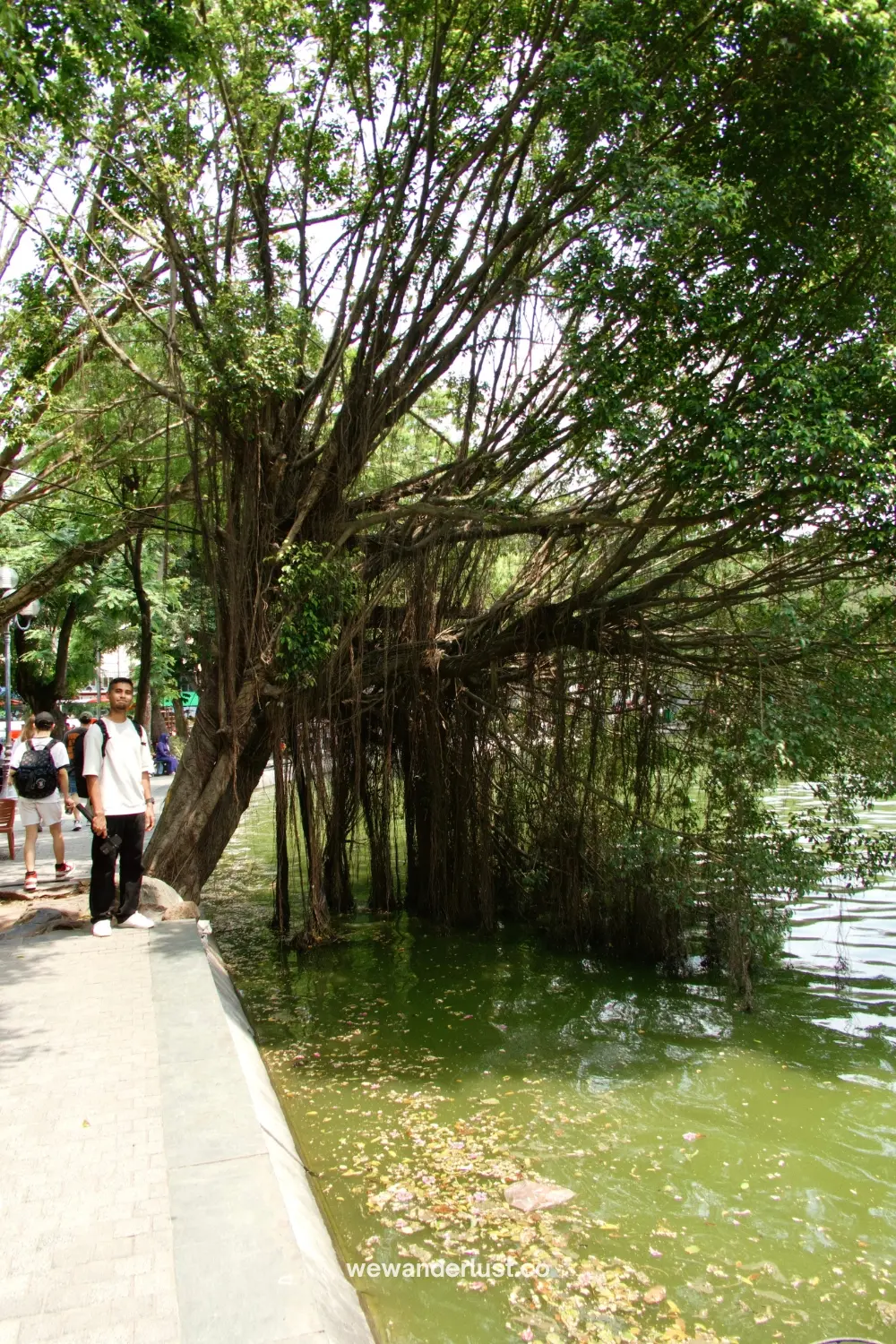
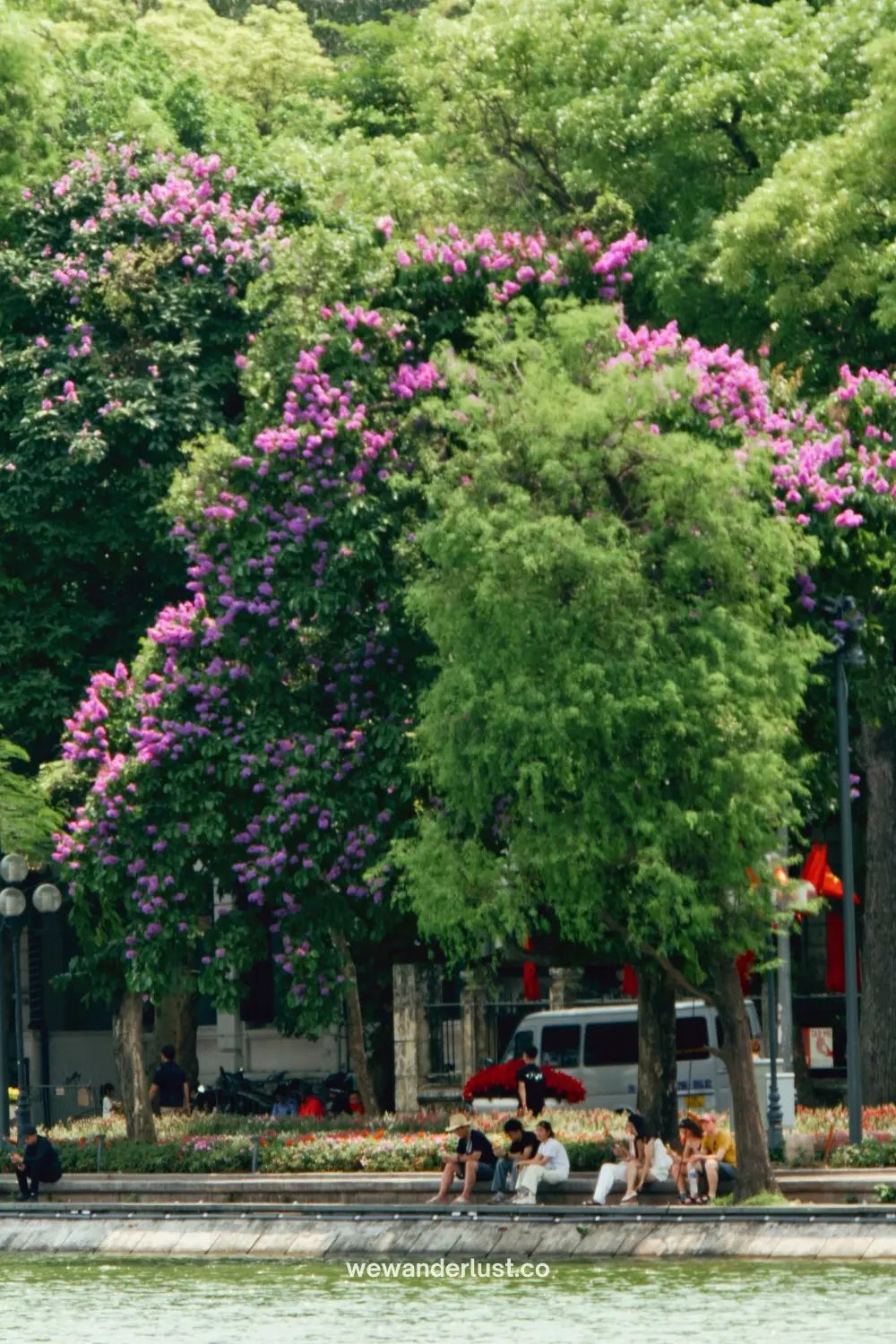
Hoan Kiem Lake sits right at the edge of the Old Quarter and is one of those places that works at any time of day. Early in the morning, locals come here to do tai chi, walk, jog, and chat on the benches. In the evening, the whole area comes alive with families, couples, and visitors all enjoying the lakeside atmosphere.
The name translates to “Lake of the Returned Sword,” referring to the legend of Emperor Le Loi, who was said to have received a magic sword from the Golden Turtle God and later returned it at this very lake. There’s something quietly special about sitting at the water’s edge and knowing that story has been told here for centuries.
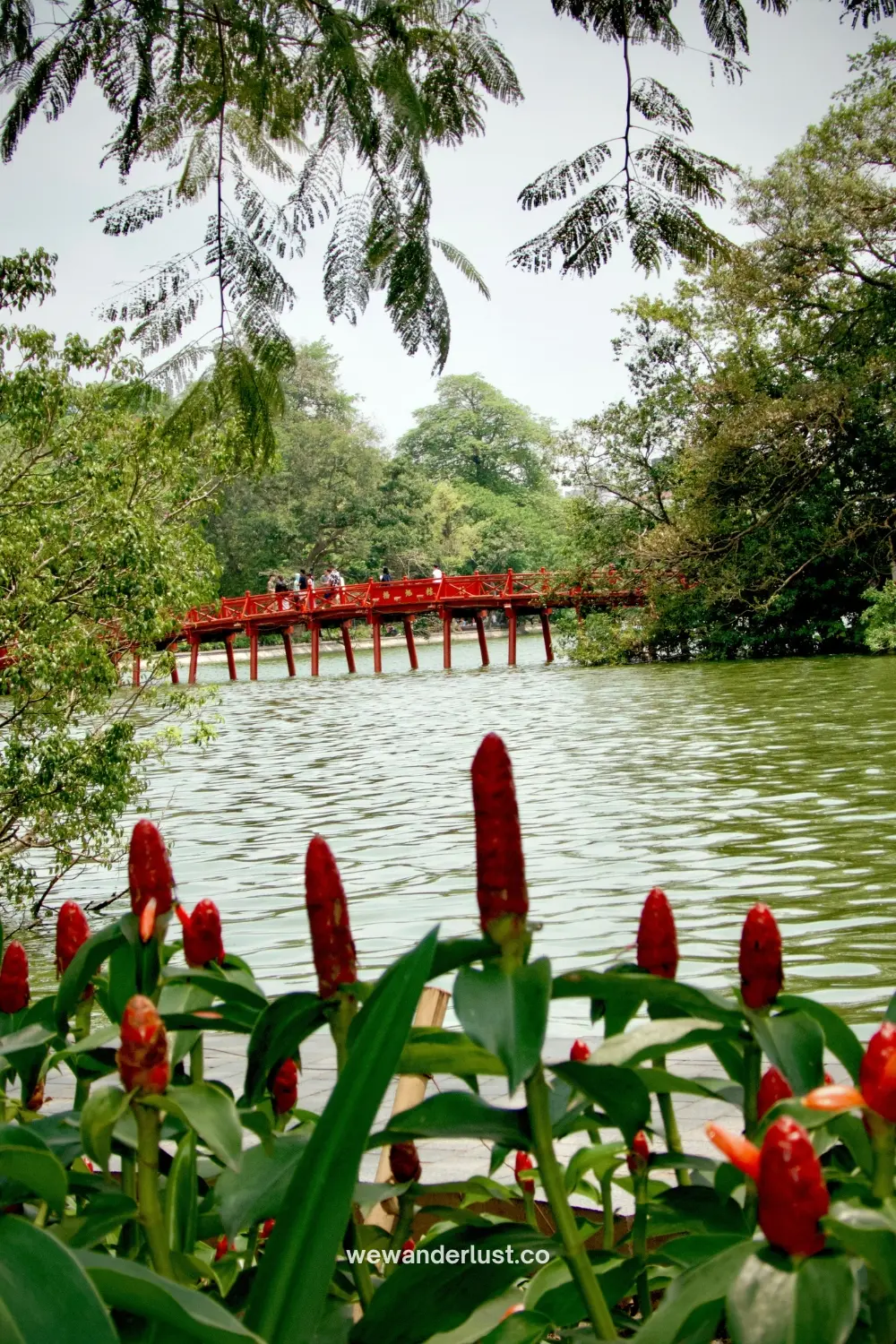
The small red bridge leading to Ngoc Son Temple (more on that shortly) is one of the most photographed spots in Hanoi, and worth every photo. On the weekend walking street evenings, the whole lake area transforms and becomes one of the most vibrant and fun places to be in the city.
Visit Ngoc Son Temple
Ngoc Son Temple sits on a small island in the middle of Hoan Kiem Lake, connected to the shore by the iconic red Huc Bridge. It’s one of the most visited sites in Hanoi and absolutely deserves its reputation.
The temple is dedicated to General Tran Hung Dao, who famously defeated the Mongol invasion in the 13th century, as well as the scholar Van Xuong and the martial hero Quan Vu. The grounds are beautiful and surprisingly peaceful given how close they are to the bustle of the Old Quarter, and there’s a preserved giant turtle on display inside that is one of the more unusual and fascinating things we saw in Hanoi.
Entrance is very affordable and it takes about 30 minutes to explore properly. It’s the perfect complement to a walk around the lake.
Have Egg Coffee at Cafe Giang
If there’s one food and drink experience that is completely unique to Hanoi and not to be missed, it’s egg coffee, and Cafe Giang is where it all started. The drink was invented here in the 1940s when milk was scarce and the owner, Nguyen Van Giang, started whipping egg yolks with sugar and coffee to create a creamy, almost custard-like foam that sits on top of a small strong Vietnamese coffee.
The result is unlike anything else. It’s rich and sweet and somehow simultaneously feels like a coffee and a dessert. We were not sure what to expect before we tried it and both ended up going back for a second.
Cafe Giang itself is wonderfully low-key: a narrow staircase leading up to a few small rooms with wooden furniture and framed photos on the walls. It’s the kind of place that has barely changed since it opened, and that’s a huge part of the charm. Get there early in the day since it gets busy, find a seat, and order one hot and one iced if you want to experience both versions.
💡 We have a full guide of the Best Coffee Shops in Hanoi, Vietnam that covers this and all our other favorite cafes in the city.

Visit Train Street Hanoi and Have Egg Coffee at Ha Noi Pho
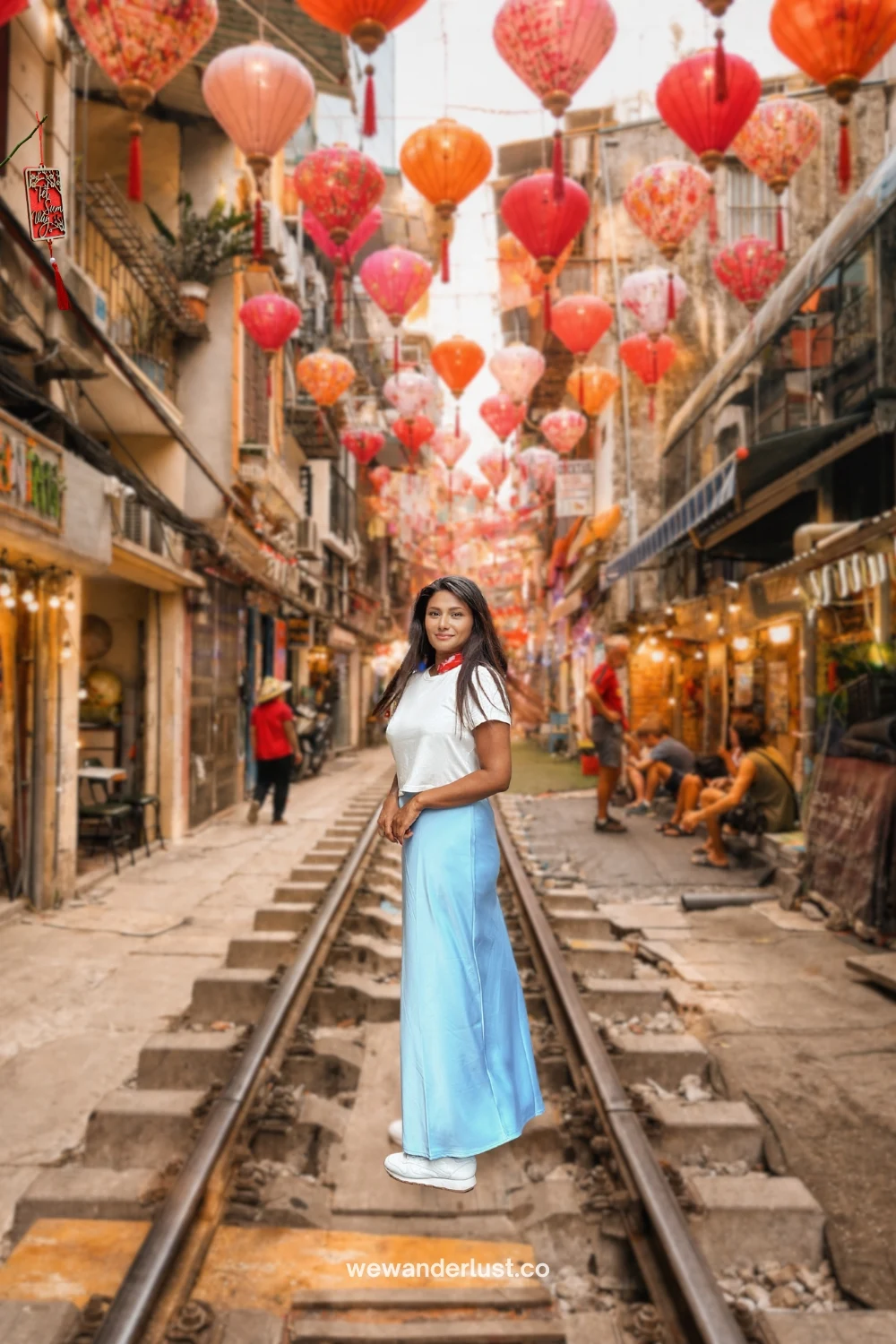
Train Street is one of those experiences that sounds like it might be a tourist gimmick and turns out to be completely exhilarating in real life. It’s a narrow residential street where the train tracks run right through the middle, flanked so tightly by houses, cafes, and telegraph wires on both sides that when the train comes through, it feels almost uncomfortably close.
We visited in 2026 and yes, it is absolutely still worth it. When the train comes, the cafe staff have you move your drinks to the ground and press yourself against the wall, and then the train tears through with this incredible rush of sound and air and energy. The whole cafe erupts every single time, and you can’t help but feel completely alive in that moment.
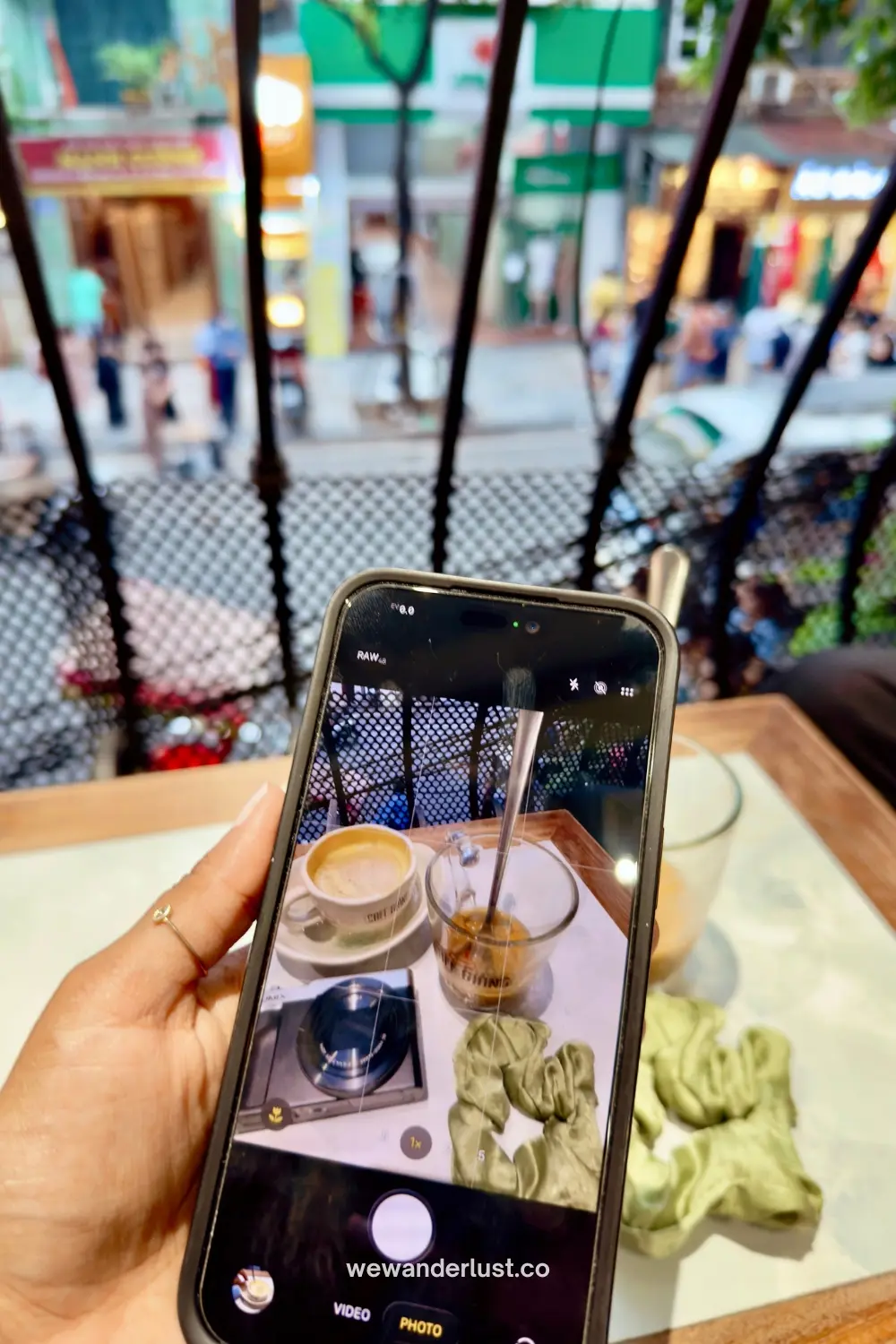
One of our favorite discoveries here was Ha Noi Pho, a gorgeous little cafe right on Train Street with a photography theme, incredible light, and a menu that includes their own version of egg coffee that is one of the best we had in the city. It’s the perfect place to settle in for an hour, order some food, and wait for the train to come through.
💡 Check the train schedule before you go. The trains departing from Hanoi Station tend to run on time, so those are the most reliable ones to plan around.
Stroll Down Phung Hung Mural Street
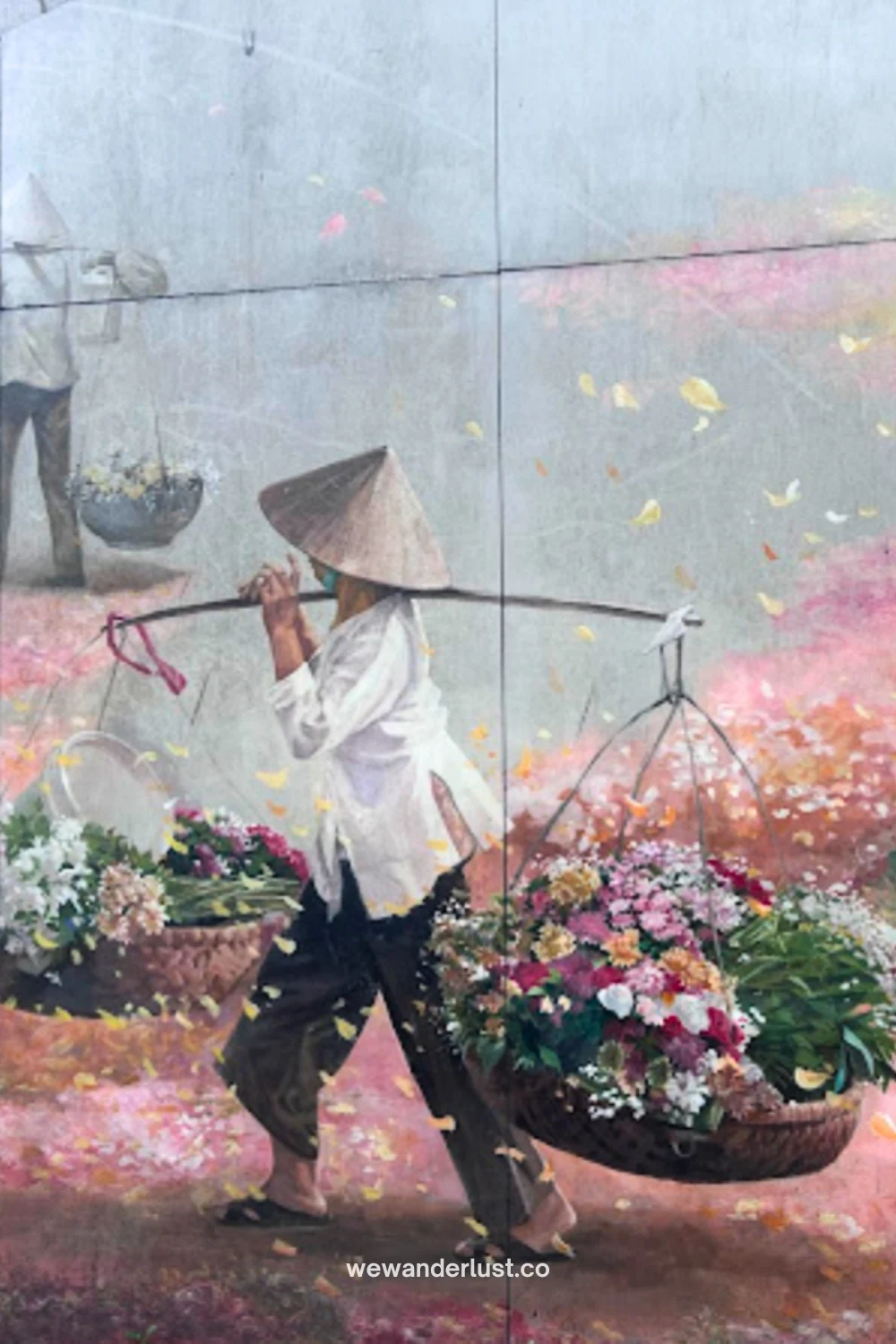
This is one of those places we almost walked straight past and I’m so glad we didn’t. Phung Hung Mural Street runs along the base of an old railway bridge in the Old Quarter, and the entire stretch has been transformed into an outdoor gallery, with huge, vibrant murals painted by Vietnamese and international artists covering the stone pillars from top to bottom.
The murals depict scenes from Hanoi’s history: traditional festivals, old street life, the French colonial era, everyday moments from decades past. It’s beautiful and thoughtful and a lovely way to spend 30 to 45 minutes just wandering and looking.
It’s much less visited than most of the other sights on this list, and there’s something really nice about finding yourself almost alone in a place this beautiful in the middle of a busy city. Go in the late afternoon when the light hits the murals well.
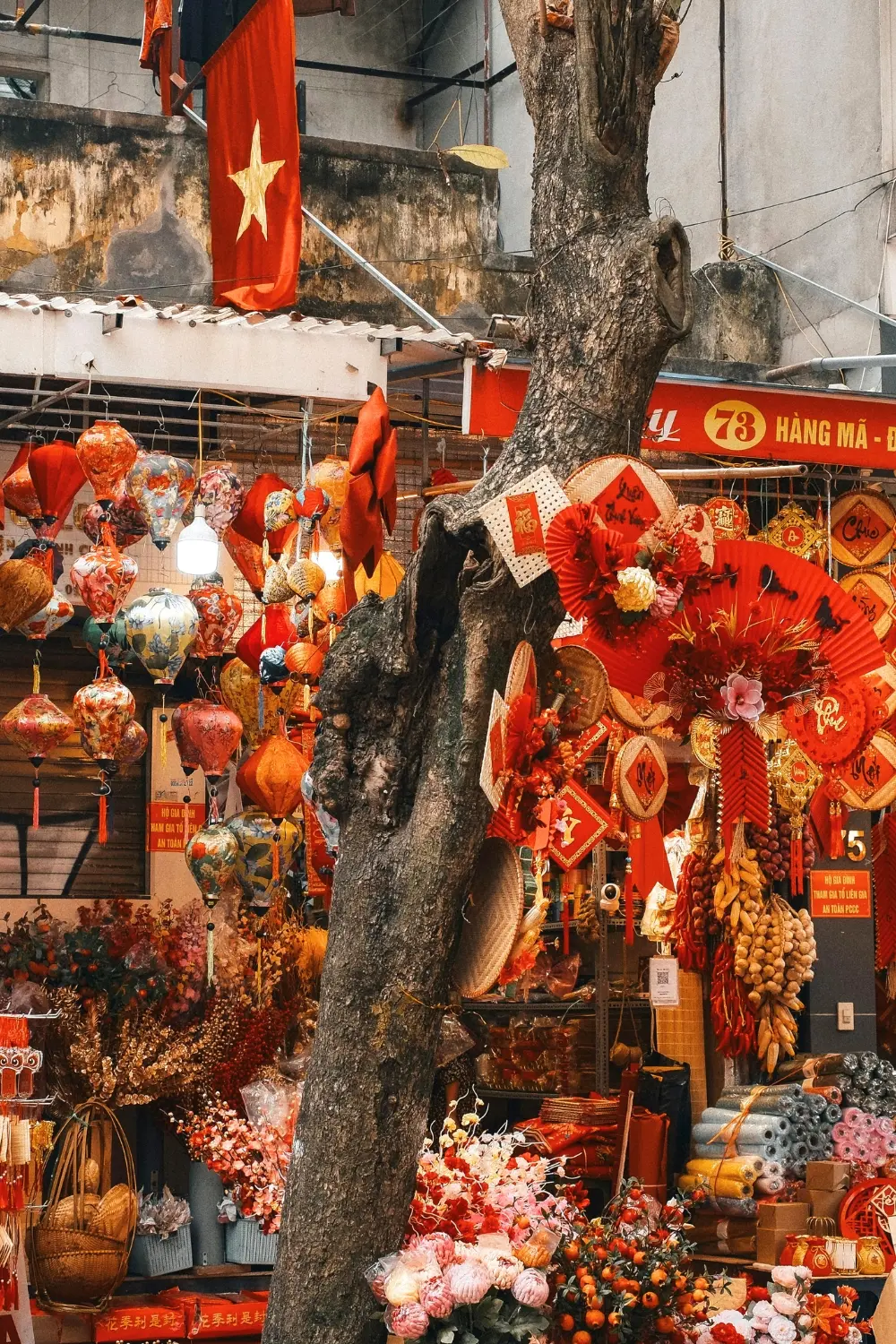
Wander Pho Hang Ma (Lantern Street)
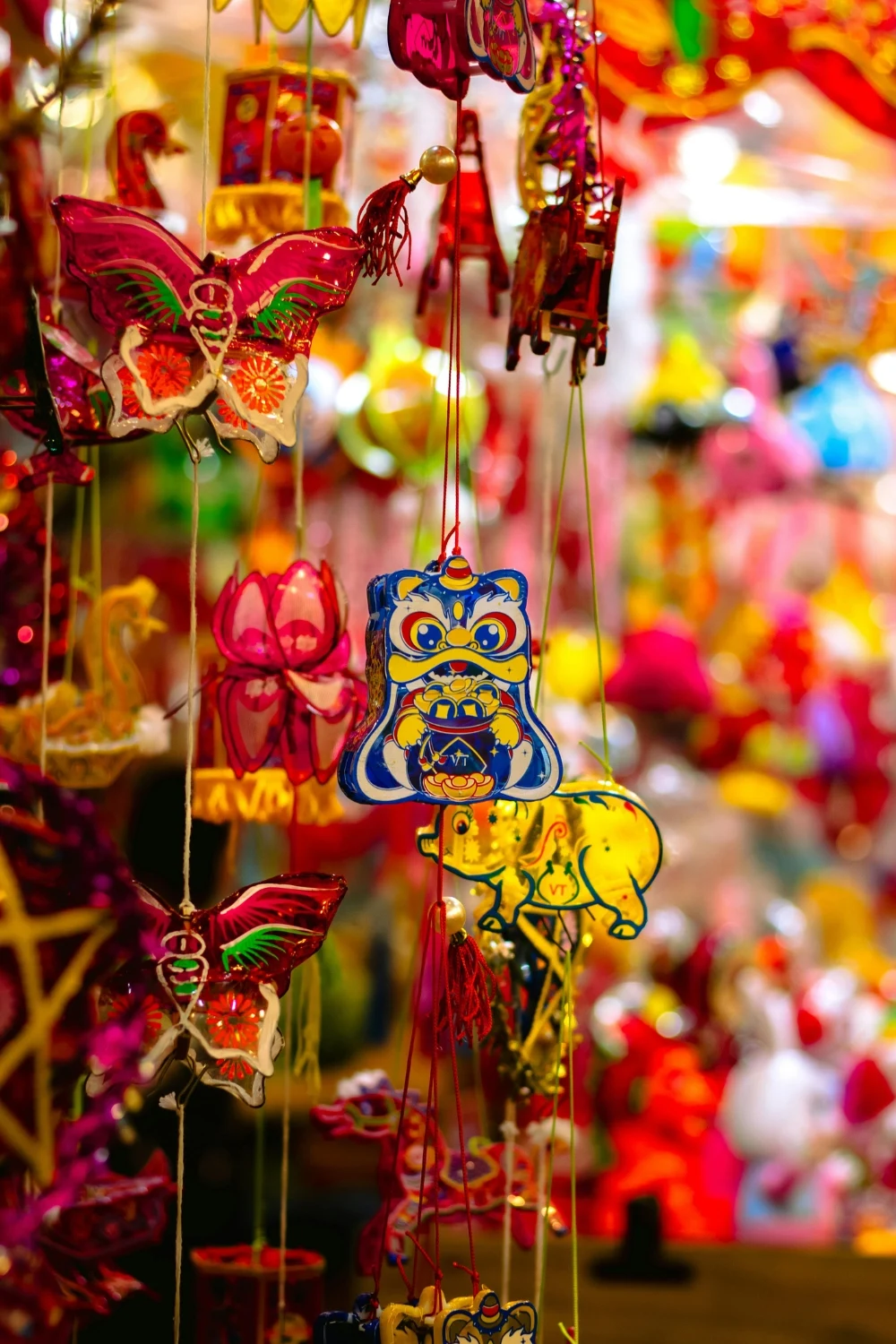
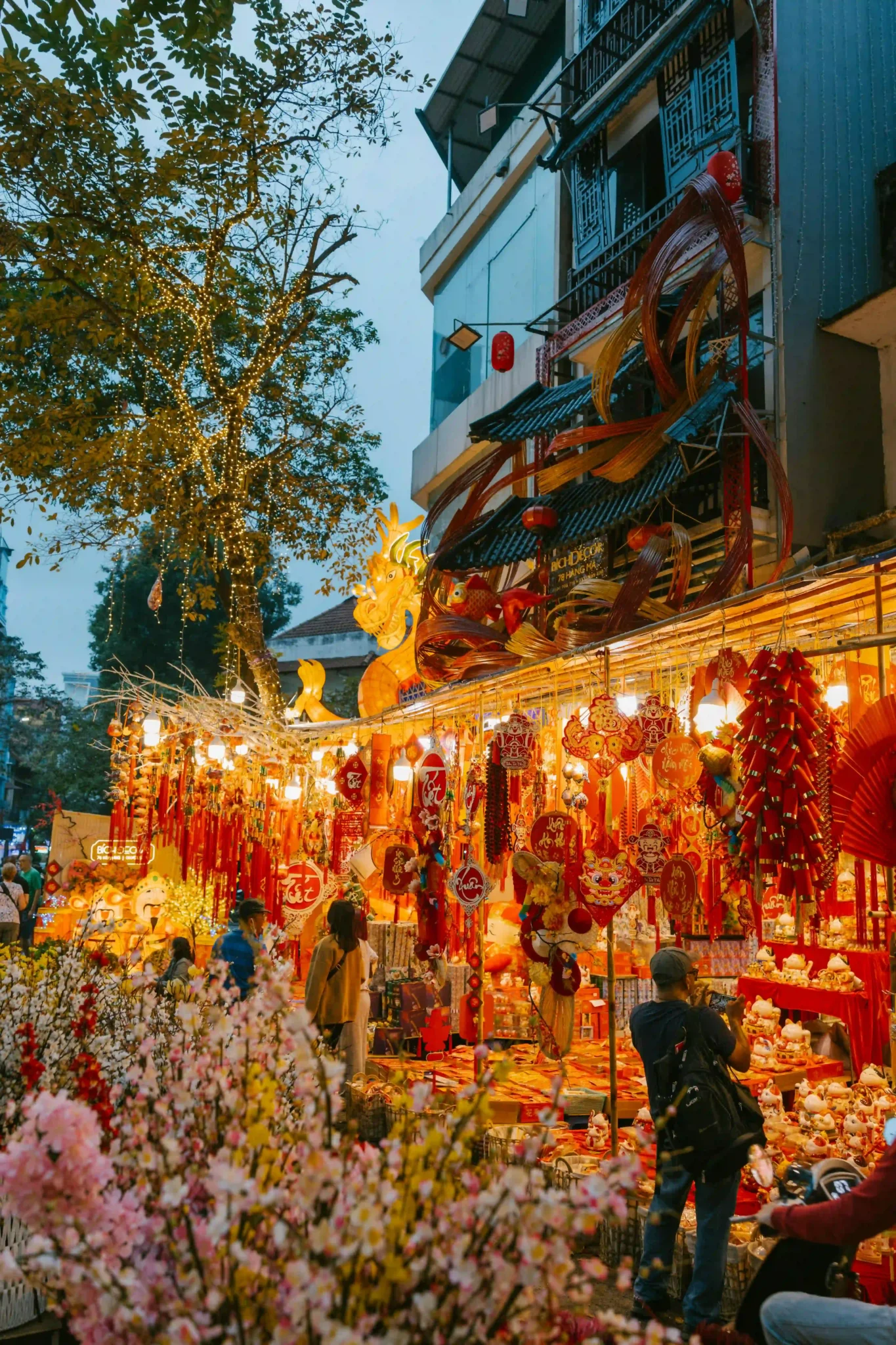
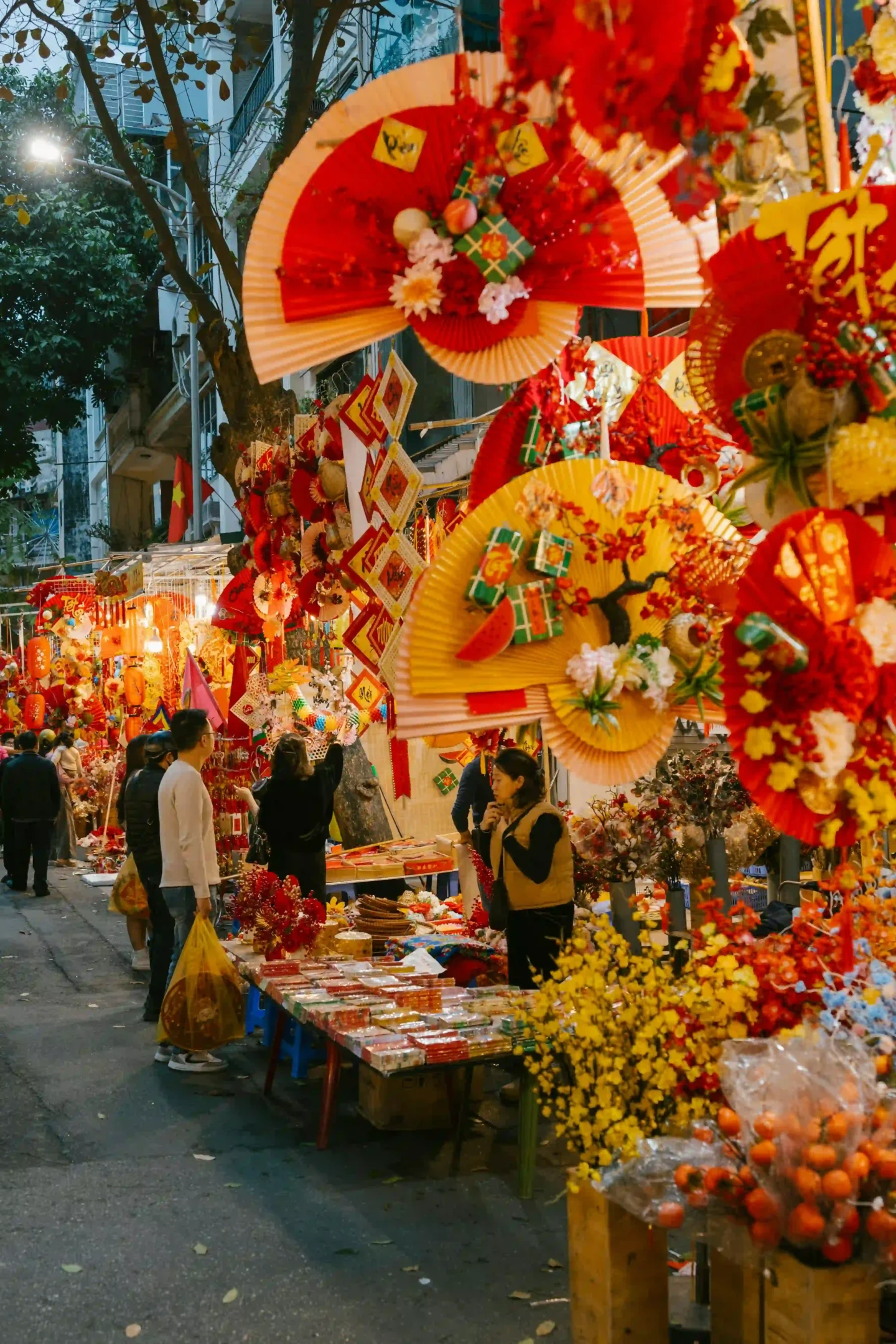
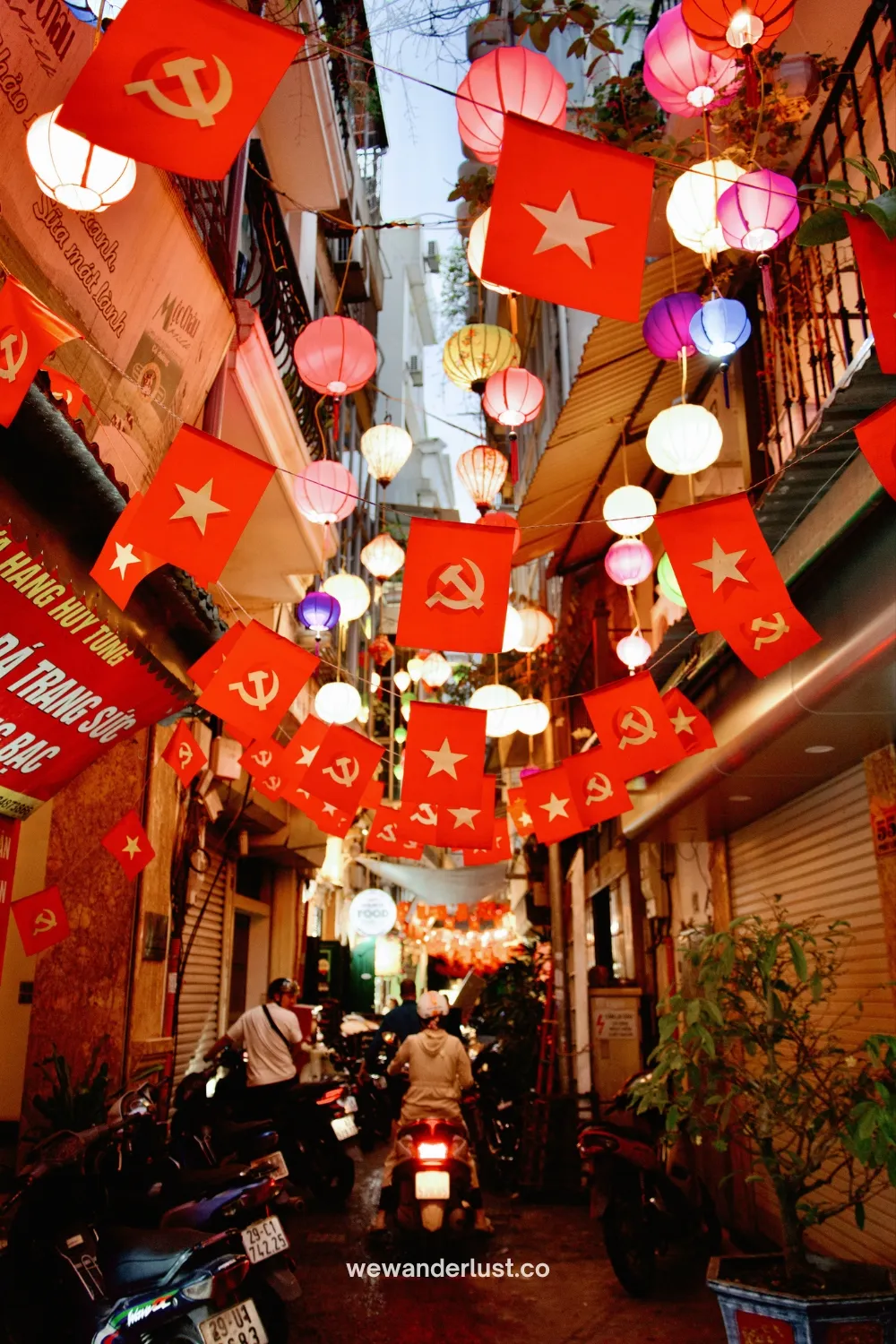
Pho Hang Ma is one of the most visually spectacular streets in the Old Quarter, lined with shops selling paper offerings, decorations, lanterns, and festive goods. At certain times of year, especially around Tet (Lunar New Year) and the Mid-Autumn Festival, the entire street is an explosion of color with paper lanterns, golden decorations, and glittering displays spilling out of every shop onto the pavement.
Even outside of festival season, it’s a fascinating street to walk through. The paper offerings made for funerals and ceremonies range from paper houses and cars to paper iPhones and Louis Vuitton bags, which is one of the more surreal and culturally fascinating things we encountered in Hanoi. It’s a short street but one of the most memorable in the city.
Visit Phan Dinh Phung Street
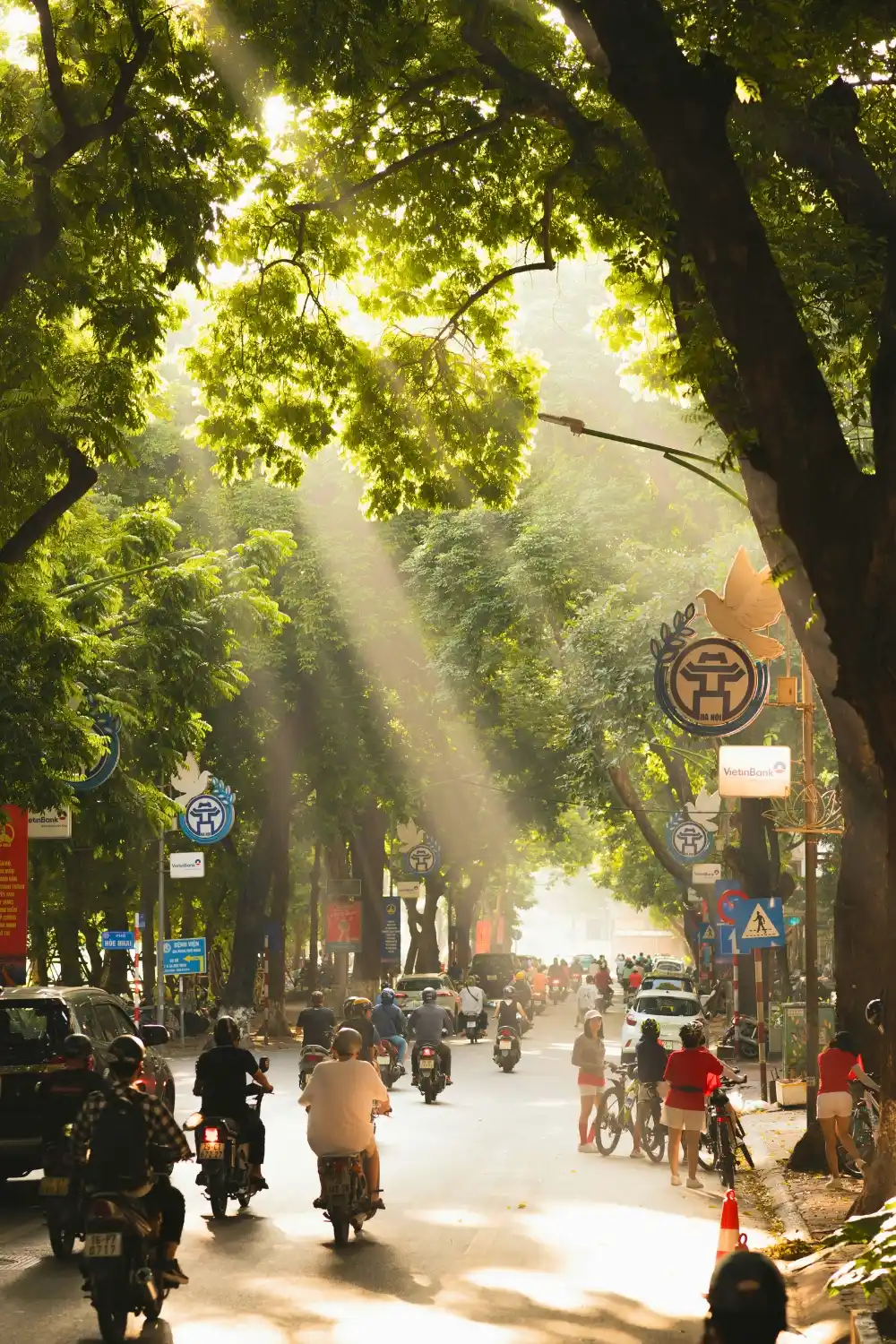
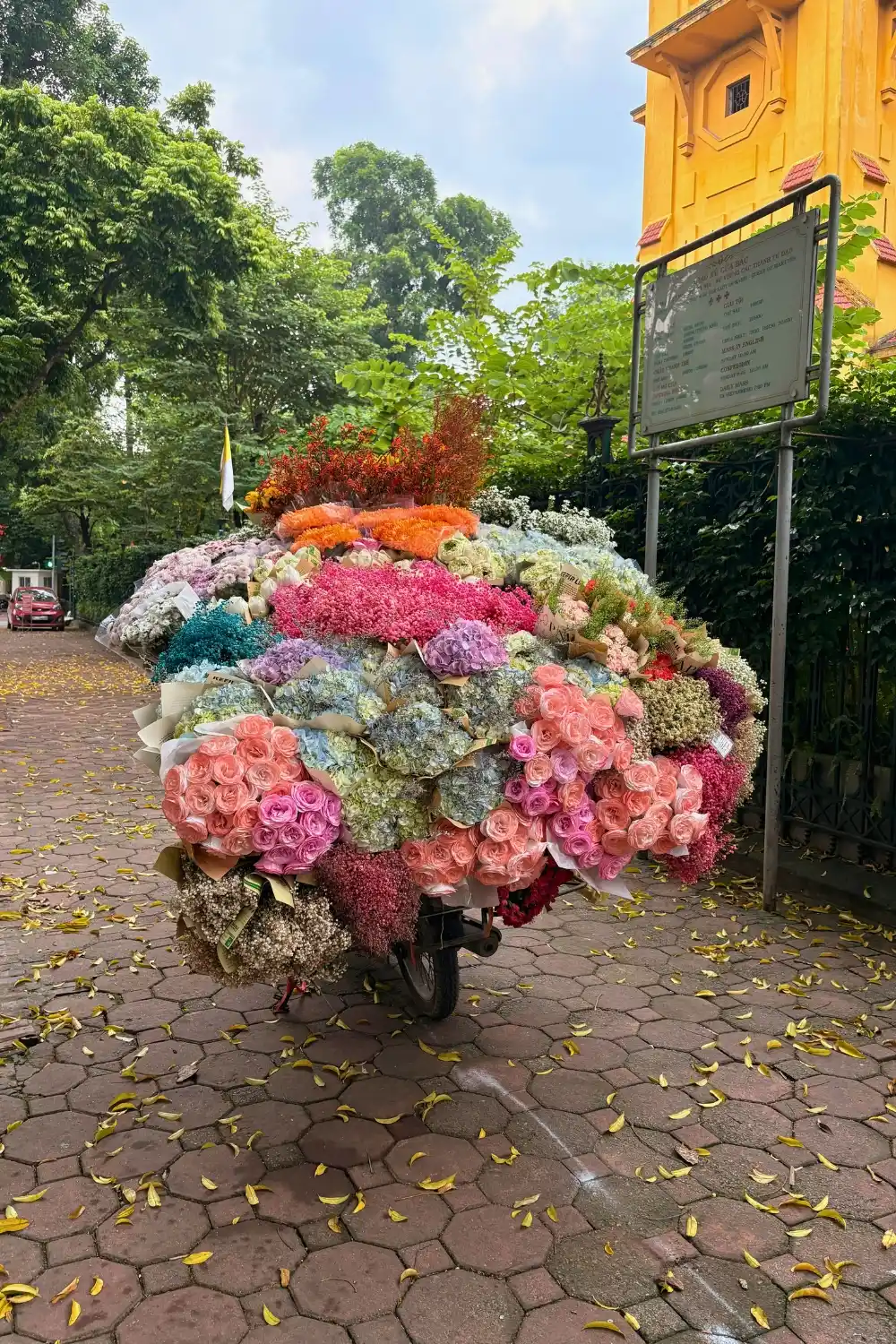
Phan Dinh Phung is one of Hanoi’s most beautiful and underrated streets, and one that most first-time visitors miss entirely. It’s a wide, tree-lined boulevard just north of the Old Quarter, with towering flame trees creating a canopy overhead that turns golden and spectacular in autumn.
It’s a great street to walk or cycle down slowly, and it’s also one of the best spots in the city for photos, especially in the early morning before traffic picks up. There are some lovely cafes tucked along here too, and it has that quintessentially Hanoi combination of French colonial architecture and tropical greenery that makes the city feel unique.
Visit Tran Quoc Pagoda
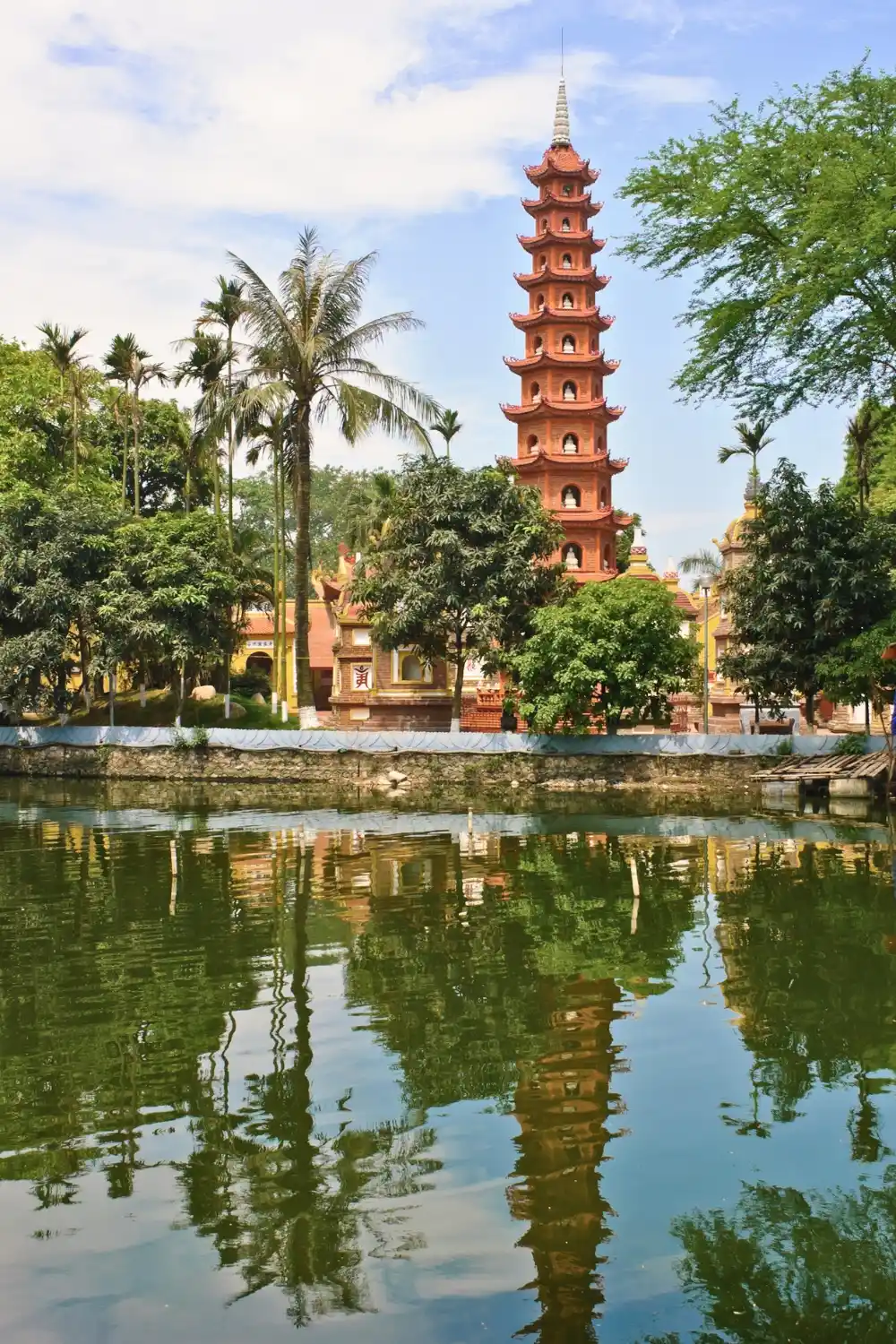
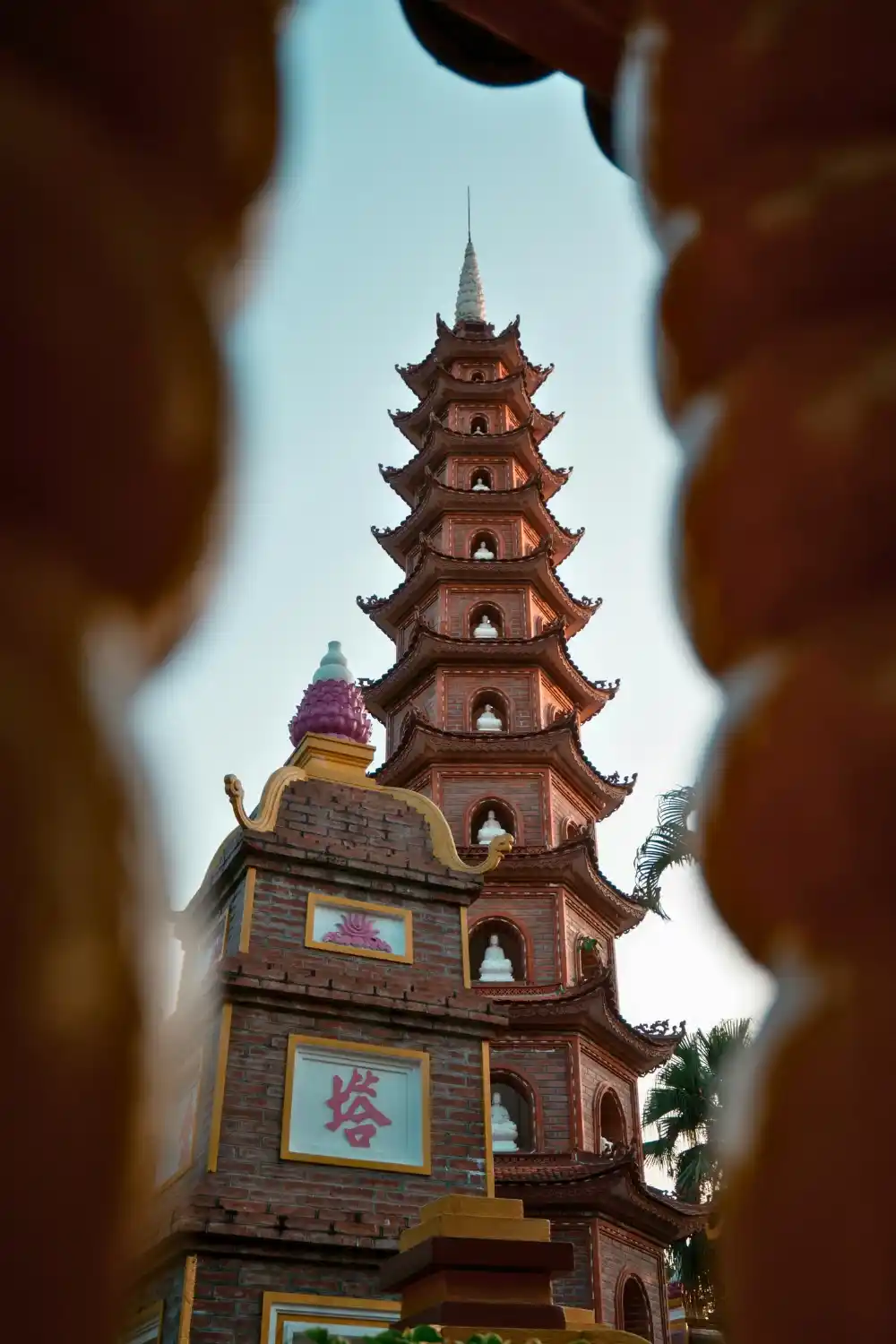
Tran Quoc Pagoda is the oldest Buddhist temple in Hanoi, sitting on a small peninsula on West Lake, and it is one of the most photogenic places in the entire city. The tall, reddish-orange tower reflected in the still water of the lake is the image you’ve probably already seen associated with Hanoi, and seeing it in person is stunning.
We went in the early morning when it was peaceful and quiet, which I’d highly recommend. Entry is free, opening hours run from around 7:30 AM to 6 PM, and it’s best reached by Grab since it’s a bit out from the Old Quarter. It’s absolutely worth the short trip.
Explore West Lake
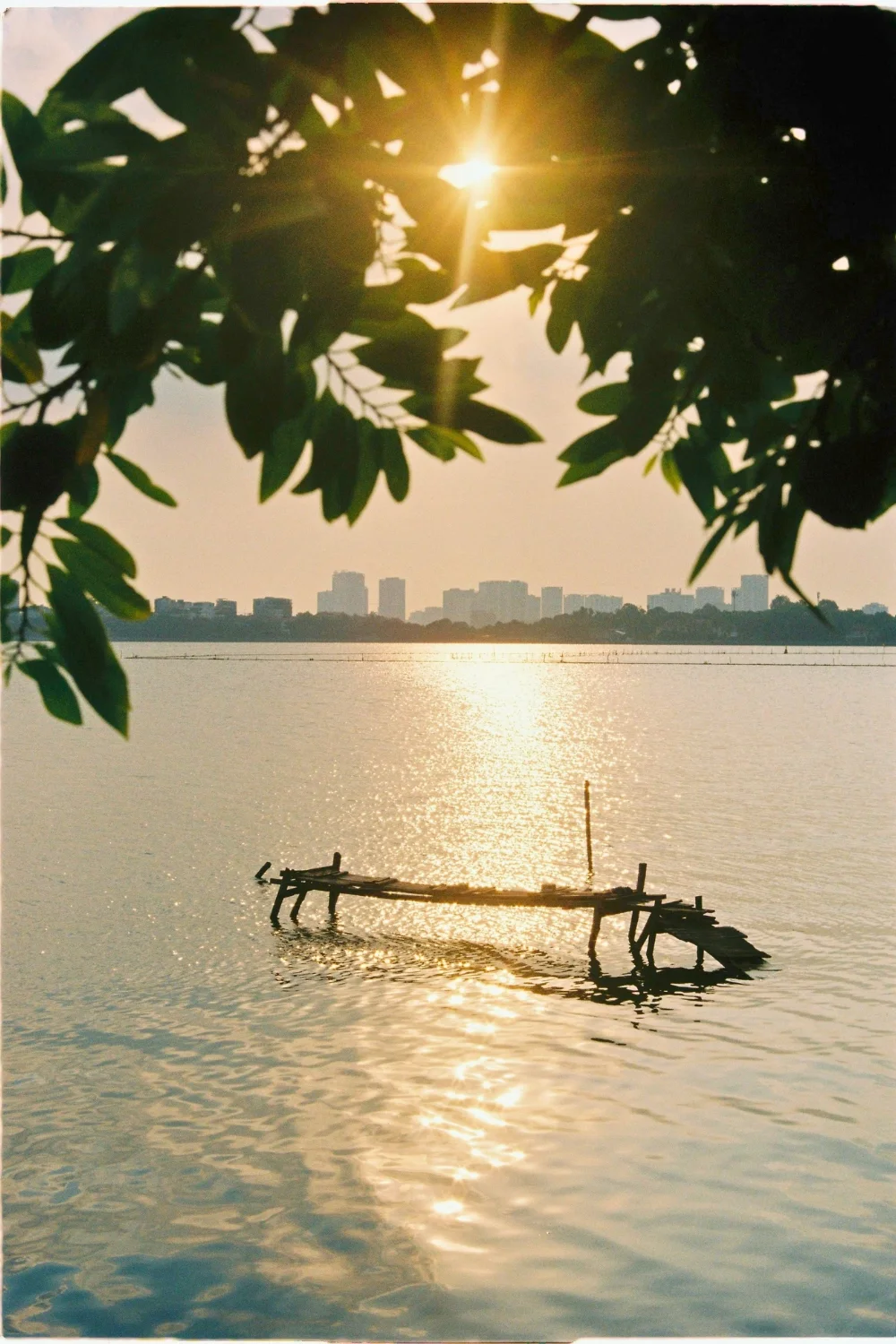
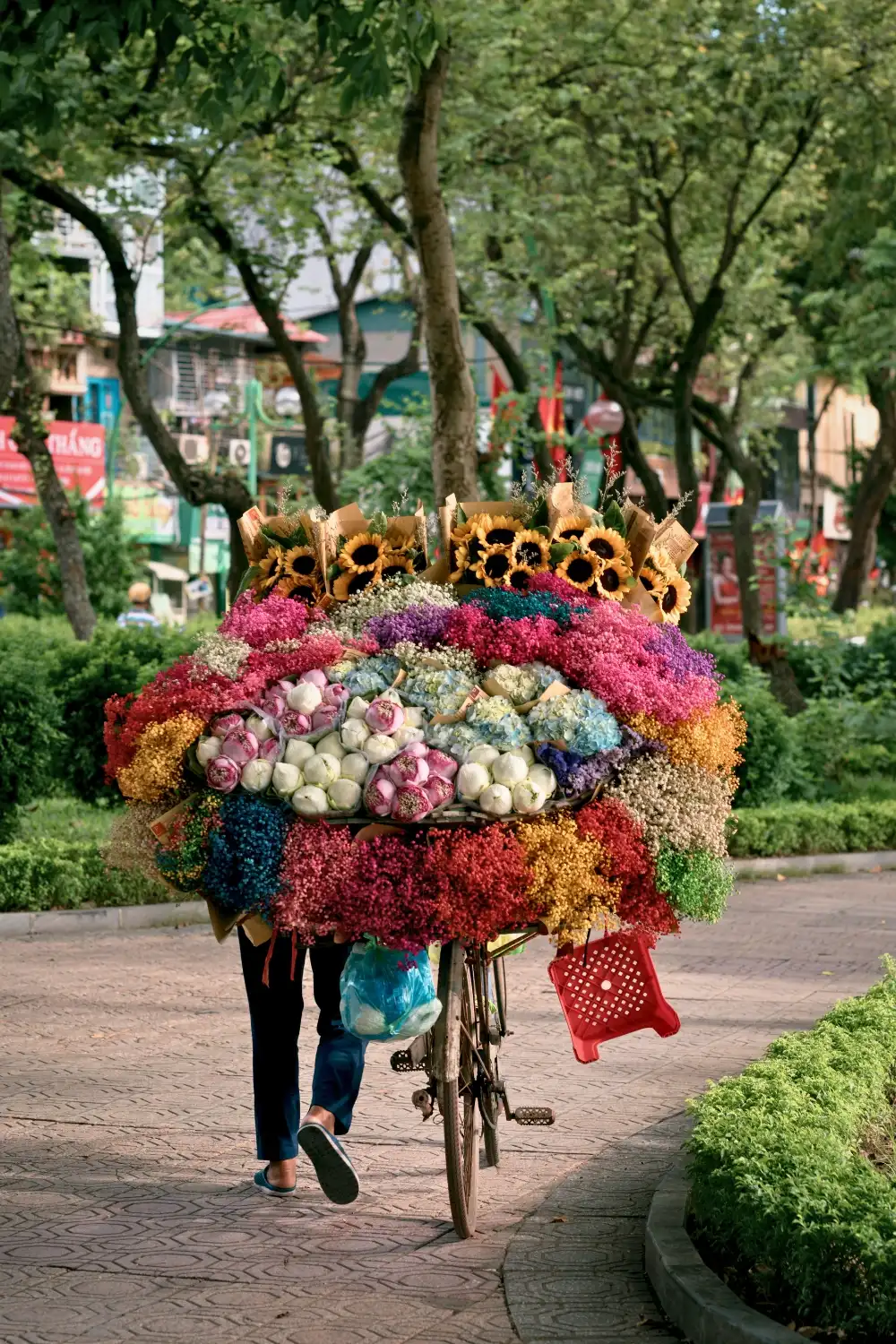
Right next to Tran Quoc Pagoda, Hanoi’s West Lake is the city’s largest lake and one of its most pleasant and local-feeling areas. It’s quieter and more residential than the Old Quarter, lined with cafes, restaurants, flower stalls, and cycling paths, and it has a completely different, more relaxed energy that we really appreciated after a few days in the busier parts of the city.
The western shore of the lake in particular is lovely for a slow morning walk or a bike ride, and the cafe scene here is excellent. If you’re planning to visit Tran Quoc Pagoda, dedicate a half morning to the whole West Lake area while you’re out there: it’s worth it.
Visit St. Joseph’s Cathedral
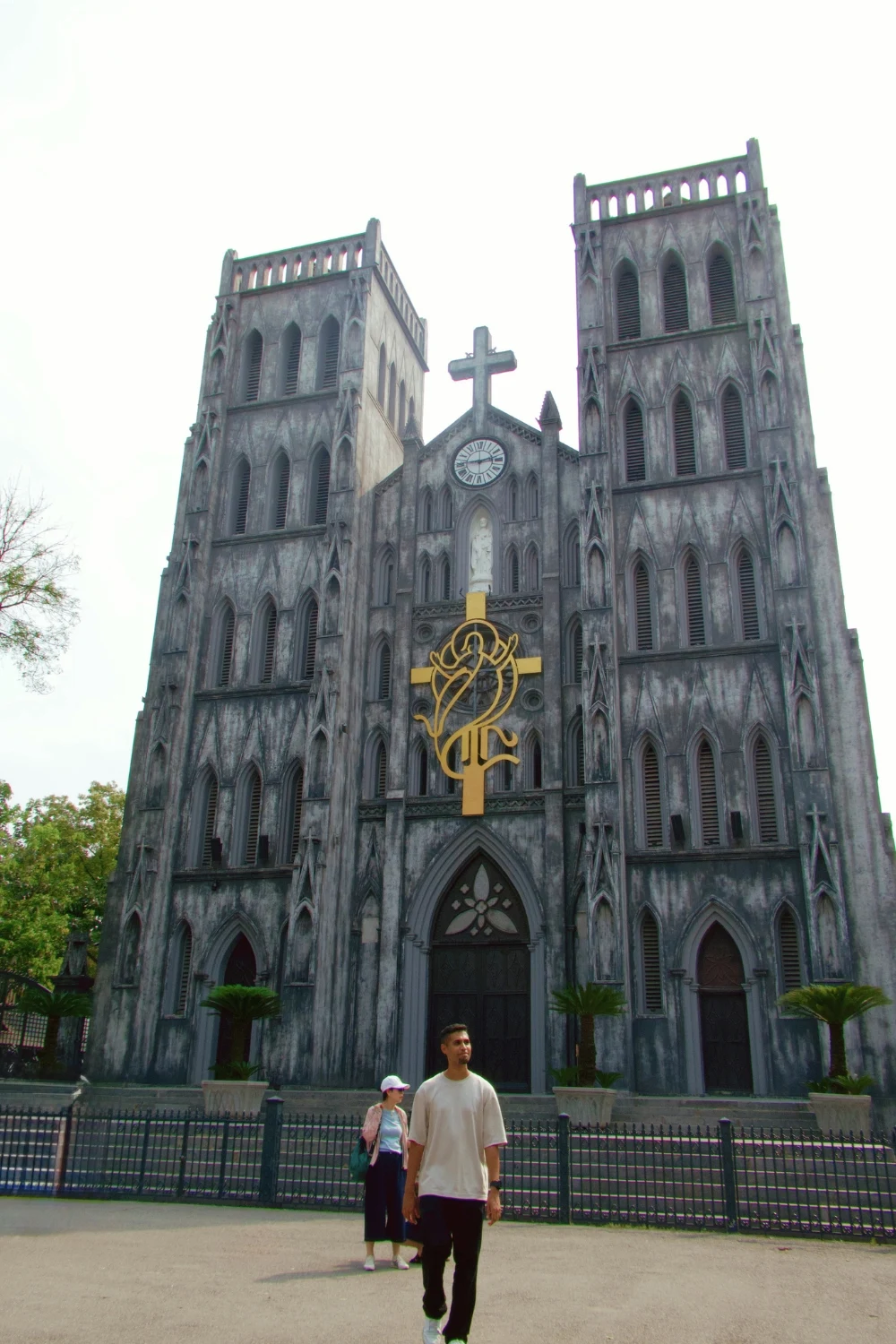
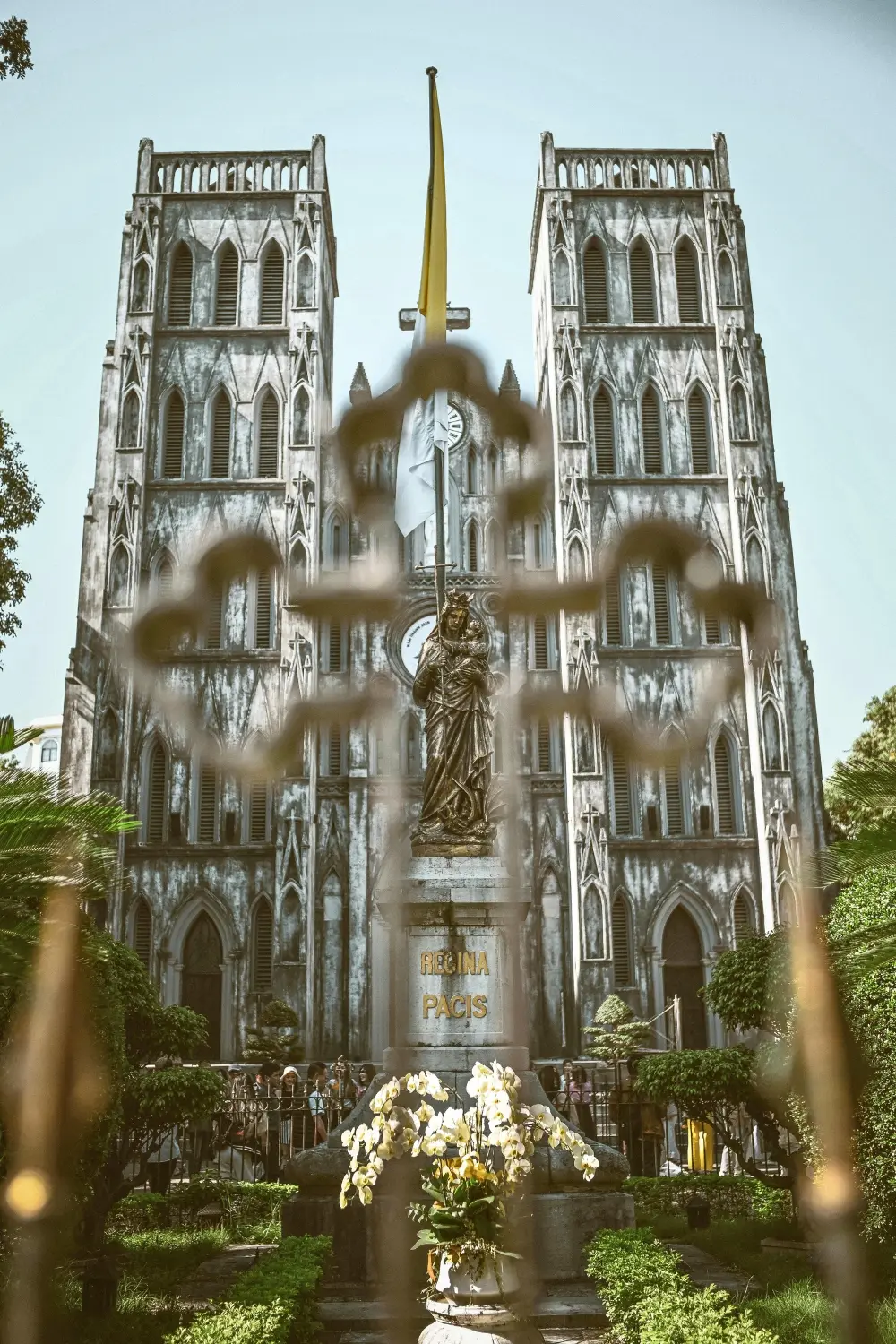
St. Joseph’s Cathedral is one of those landmarks that stops you in your tracks the first time you see it. The neo-Gothic facade, with its twin bell towers and intricate stonework, rises up at the end of a narrow street in the Old Quarter and looks, briefly, like it could belong somewhere in France. It was built in 1886 during the French colonial period and is one of the most striking examples of that era’s architecture in Vietnam.
The main doors are only open during mass times, but the side entrance is open at other times, and the interior is worth stepping into for a moment of quiet and a look at the stained glass. The streets around the cathedral are also lined with some lovely cafes and a taproom for a well-regarded local brewery, so it’s a great area to explore slowly.
Discover Nhà Sách Mão: A Secret Bookstore
This is one of those hidden gem recommendations that Waseem and I genuinely love sharing because it’s exactly the kind of place that makes a city feel like it has real depth. Nhà Sách Mão is a speakeasy-style secret bookstore and cafe that you would walk straight past without ever knowing it’s there, which is honestly a big part of the charm.
Inside, there’s a cool spiral staircase leading up to a second level, tiny tables and little chairs where you can order a drink and just sit and take it all in, and shelves full of Vietnamese books with the occasional surprise tucked in between (we found exactly one English book: a pocket Oxford dictionary, which made us laugh).
We ordered a passionfruit drink and stayed way longer than planned. It’s a little out of the way but absolutely worth the detour if hidden gems are your thing.


Take a Cyclo Ride Through the Old Quarter
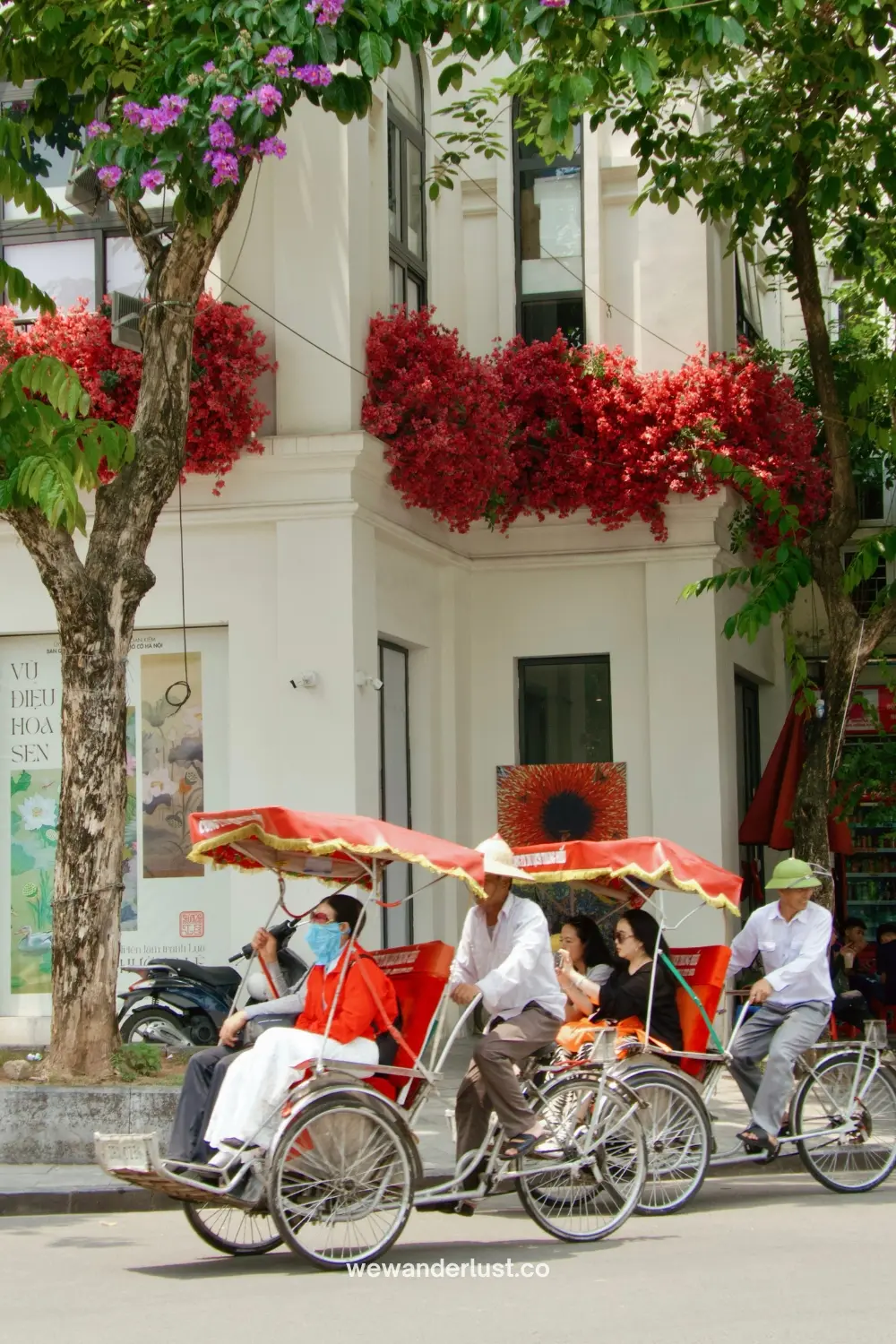
We didn’t take a cyclo ride ourselves during our visit, but we saw so many people doing it through the Old Quarter and it looked like such a wonderful way to take in the streets at a slower pace. A cyclo is a three-wheeled bicycle rickshaw, and watching them navigate the narrow lanes of the Old Quarter with complete ease was pretty cool.
If you’re not as keen on walking everywhere or you just want a different perspective on the city, a cyclo ride is a great way to cover ground while still feeling like you’re part of the streetlife rather than rushing past it. Rides can be negotiated directly with drivers around Hoan Kiem Lake: just make sure you agree on a price and route before you set off.
Temple of Literature
We ran out of time to visit the Temple of Literature ourselves, which is honestly one of my biggest regrets from our Hanoi trip and the reason it’s so high on the list for our return visit. This is one of the most significant historical sites in all of Vietnam, originally built in 1070 as a Confucian temple and later the site of Vietnam’s first university.
The architecture is stunning, the gardens are beautifully maintained, and it’s the kind of place that gives you a real sense of just how ancient and intellectually rich Hanoi’s history is. You’ll also recognize the main gate as the image on the back of the 100,000 dong note, which is a fun detail. Entrance is around 30,000 VND, opening hours run from 8 AM to 6 PM, and it’s well connected by Grab from the Old Quarter.
One Pillar Pagoda
Another one we didn’t get to during this visit, but it’s absolutely on the list for next time. The One Pillar Pagoda is one of Vietnam’s most iconic structures, a small wooden pagoda built on a single concrete pillar in the middle of a lotus pond, designed to resemble a lotus flower emerging from the water. It was originally built in 1049 and has been rebuilt several times since.
It’s a quick visit, usually combined with the nearby Ho Chi Minh Mausoleum complex, and the symbolism behind the design (the lotus being a symbol of purity in Buddhist tradition) makes it much more interesting than it might initially appear from photos.
Ho Chi Minh Mausoleum
We didn’t visit Ho Chi Minh’s Mausoleum during our time in Hanoi, partly because the queues can be very long and partly because we were spoiled for time with everything else. That said, I want to include it because for many visitors it’s a deeply meaningful and important stop.
The mausoleum is where Ho Chi Minh’s preserved body is on display, and it’s an incredibly significant site for Vietnamese people. There are strict rules about dress and behavior inside, and the building is only open certain mornings. If you’re interested in Vietnamese history and culture, it’s worth the effort. If you’re short on time and it’s not calling to you personally, the exterior is photogenic and can be appreciated from outside without going in.
Book Here: Hanoi Half-Day or Full-Day Tour
Watch a Water Puppet Show
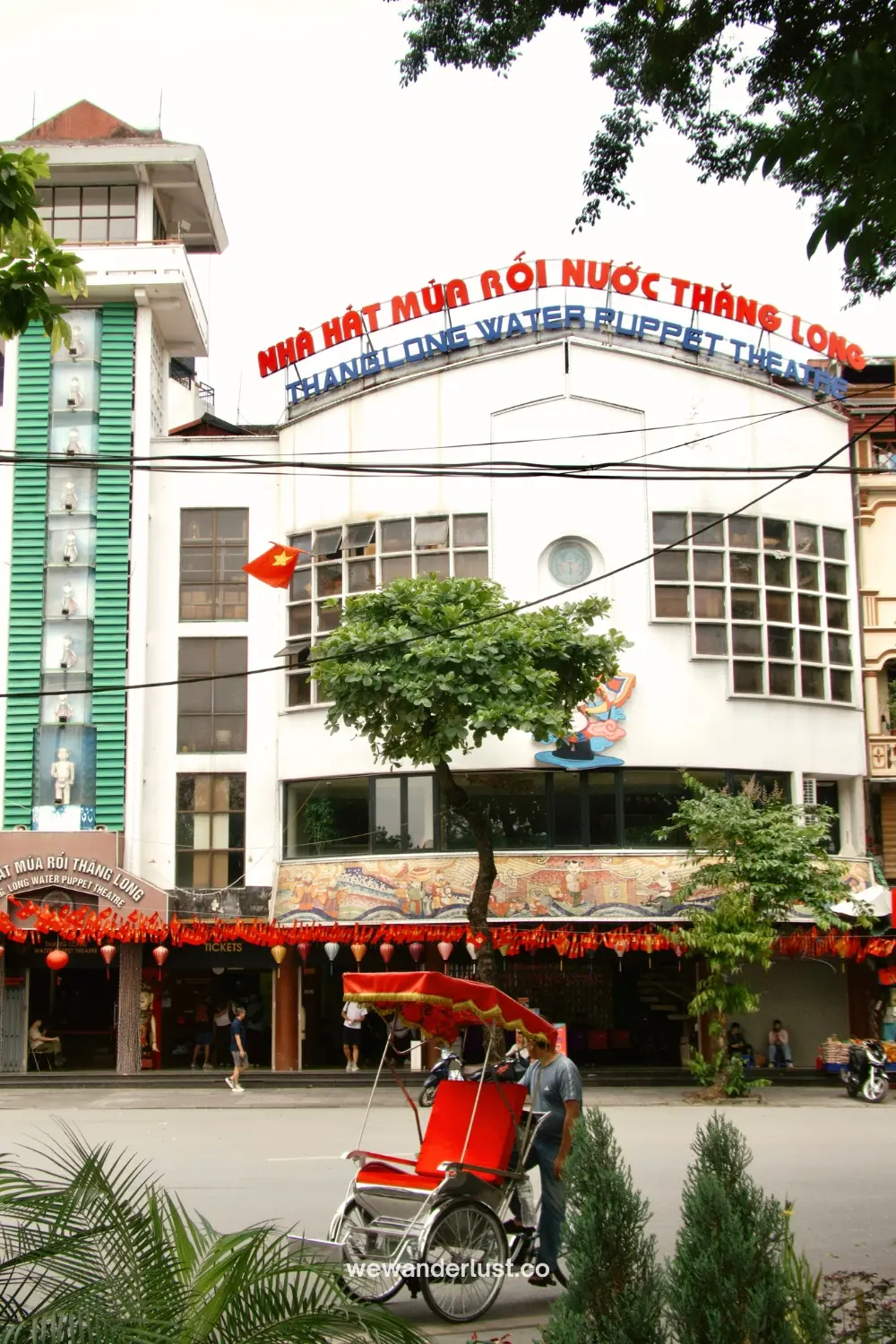
A water puppet show is one of those experiences that sounds old-fashioned until you’re actually sitting in front of one, and then it’s completely captivating. Traditional Vietnamese water puppetry dates back over a thousand years and involves wooden puppets performing on the surface of a pool of water while the puppeteers control them from behind a screen. It’s accompanied by live traditional music, and even though the narration is in Vietnamese, the story is easy to follow.
We didn’t get to see one during this visit but all the more reason to go back. The Thang Long Water Puppet Theater near Hoan Kiem Lake is the most popular venue: shows run multiple times per day and tickets sell out, so booking in advance is a good idea.
Book Here: Hanoi Water Puppet Show
Have a Banh Mi and a Bowl of Pho
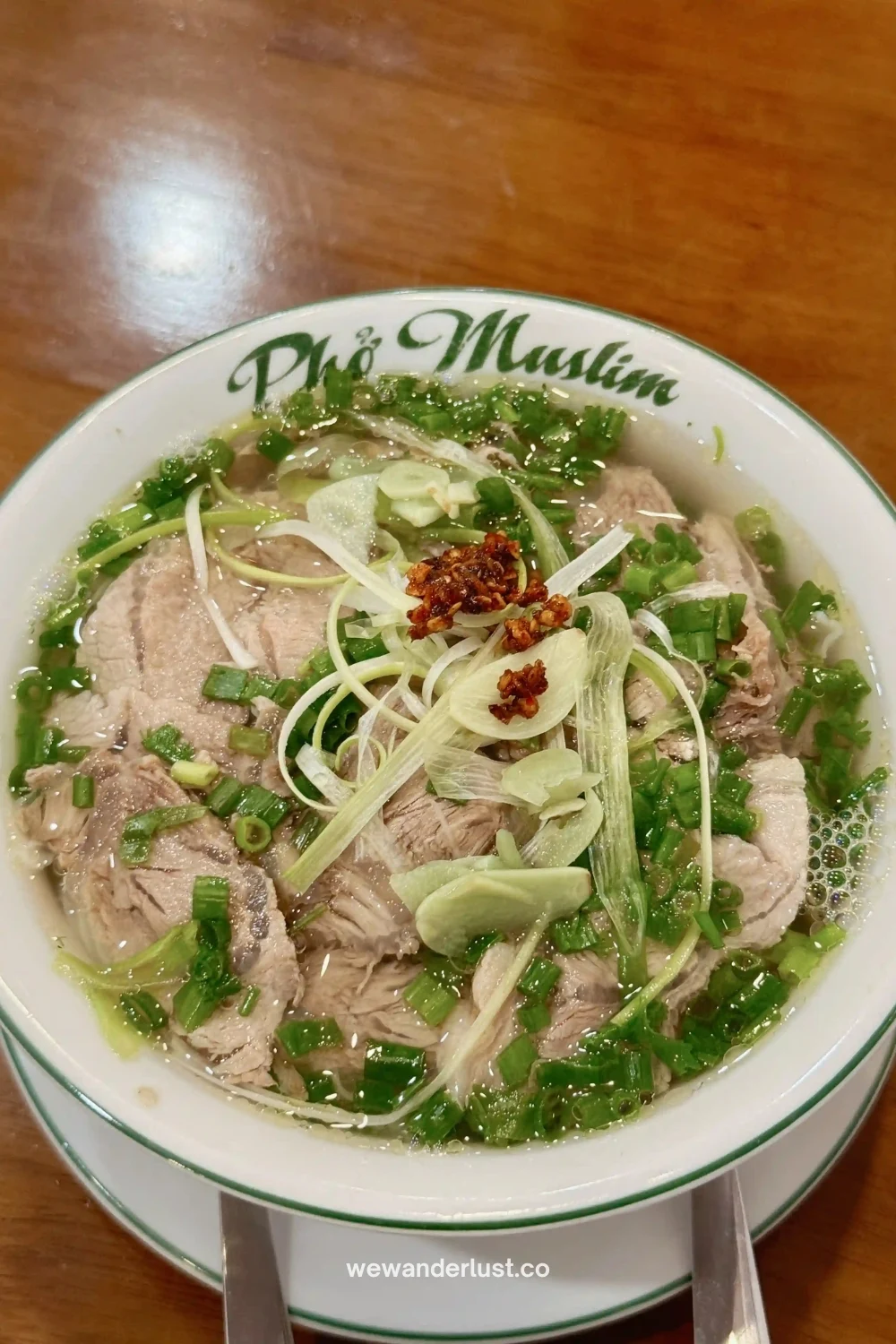
This isn’t so much an activity as it is a non-negotiable part of your Hanoi experience. Pho was invented in northern Vietnam, and the Hanoi version, which is lighter and cleaner than the southern style you might be more familiar with, is something you should have at least once for breakfast the way locals do: early, on a tiny plastic stool on the pavement, with fresh herbs and a squeeze of lime.
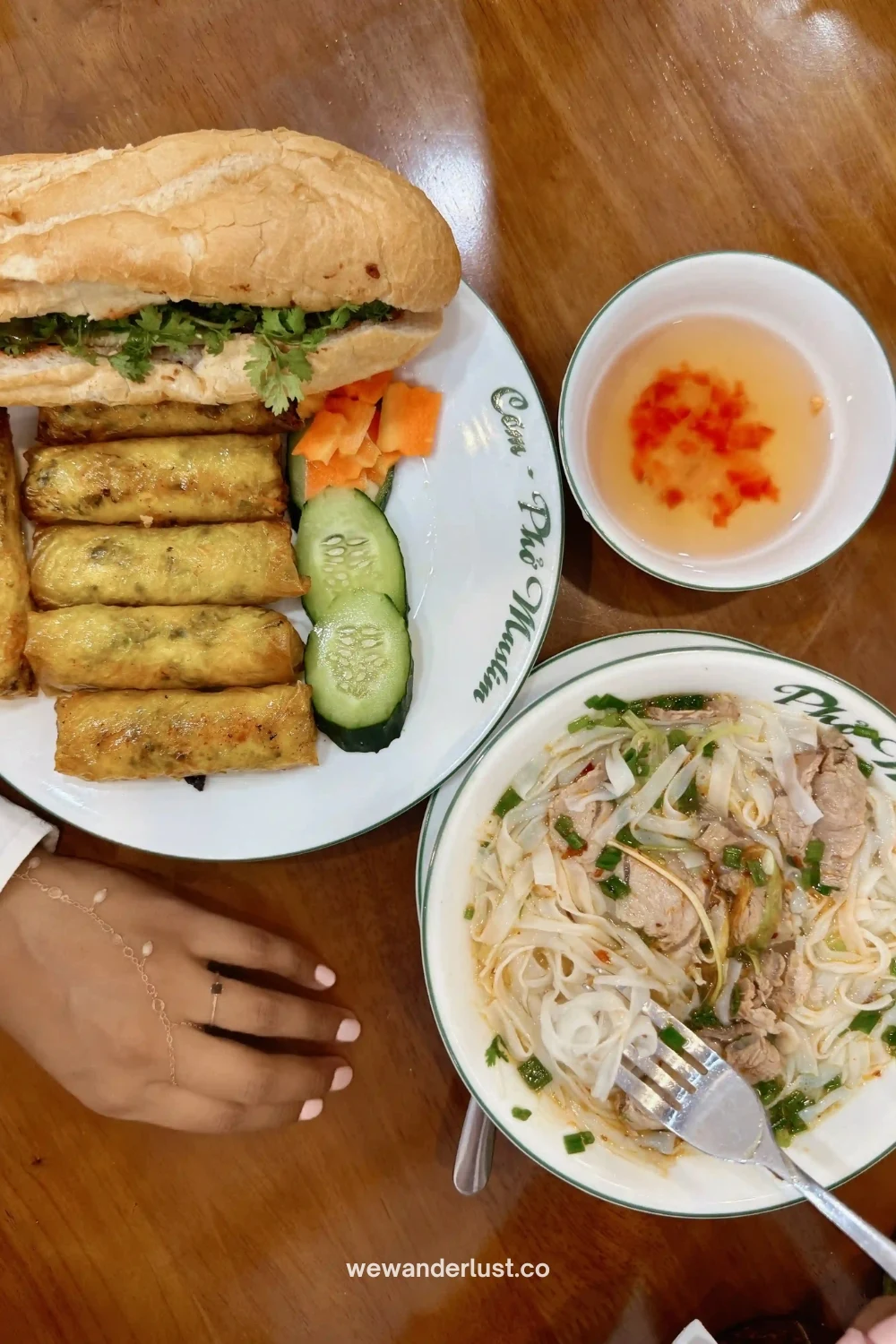
Banh Mi is equally essential. The baguette comes from the French colonial era but the Vietnamese have made it entirely their own, stuffing it with pate, fresh vegetables, chili, and whatever fillings the vendor specializes in. The combination of flavors is so good it’s almost unfair, and you can eat extremely well for the equivalent of a dollar or two.
We have a full guide to the best cafes and food in Hanoi as part of our 2 Day Hanoi Itinerary, which includes a day trip to Ninh Binh and our top cafe and food picks.
Visit Ta Hien Beer Street (Bia Hoi Corner)
We’re not drinkers ourselves so Ta Hien Beer Street wasn’t really our scene, but I’d be doing you a disservice if I left it out because it’s one of the most famous and lively spots in all of Hanoi, especially after dark. Bia Hoi Junction, as it’s also known, is the intersection of Ta Hien and Luong Ngoc Quyen streets in the Old Quarter, and it comes completely alive at night with streetside bars, tiny plastic stools, cold beers, and a mix of locals and travelers that creates an energy unlike anywhere else in the city.
Bia Hoi is the fresh draught beer brewed daily and sold here for almost nothing, and the whole vibe is incredibly social and unpretentious. Even if you just walk through to take it in, it’s worth seeing. If you do want to sit down, go early to get a good spot, and choose a table slightly back from the main road if the crowds aren’t your thing.
Take a Hop-On Hop-Off Bus Tour
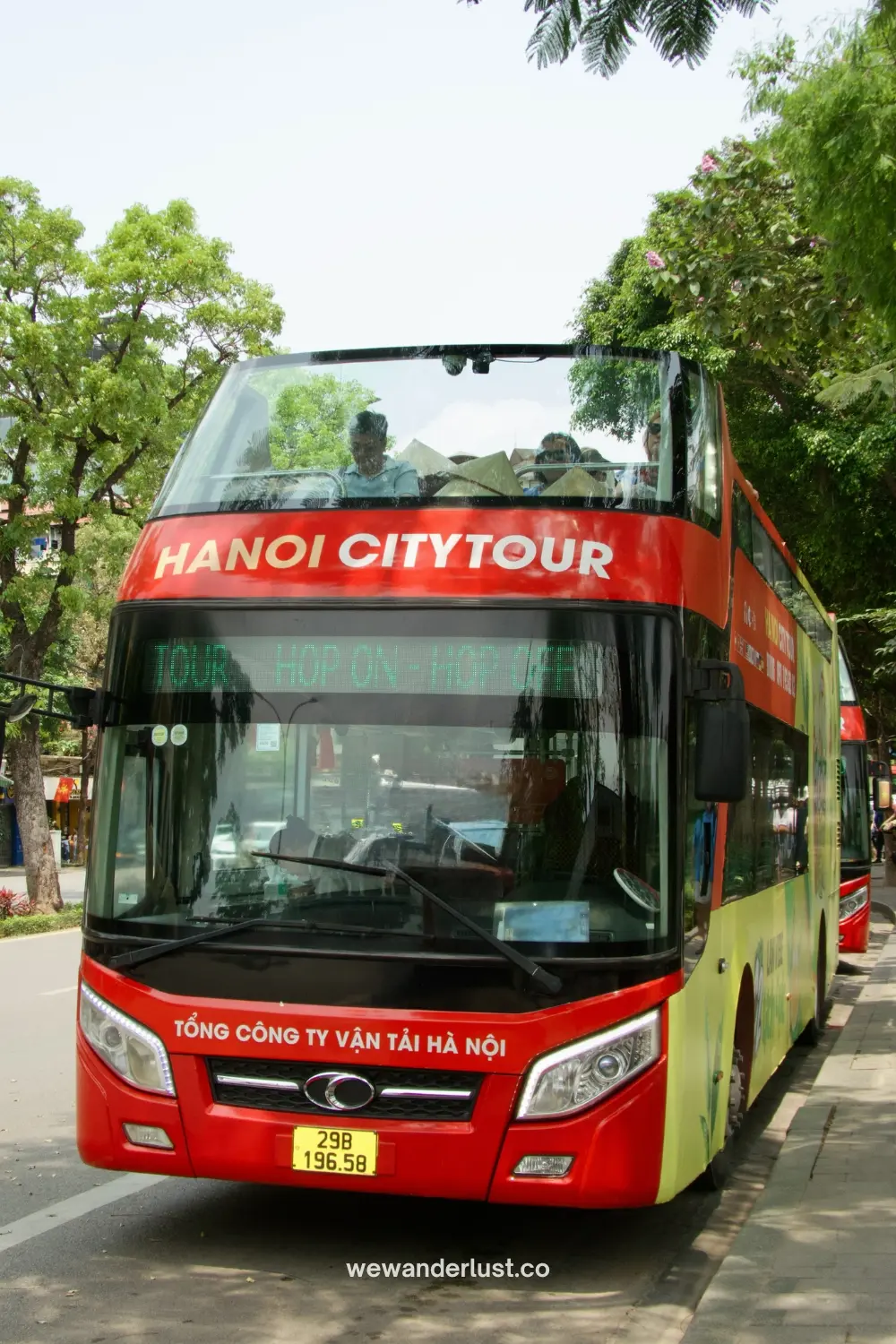
If it’s your first time in Hanoi and you want to get oriented quickly, a hop-on hop-off bus tour is one of the most practical and enjoyable ways to do it. The route covers most of the major sights across the city including the Old Quarter, West Lake, the Ho Chi Minh Mausoleum area, and more, and you can hop off wherever something catches your eye and get back on the next bus.
It’s also a great option for the sites that are a little further out from the Old Quarter, like West Lake and Tran Quoc Pagoda, giving you flexibility without the hassle of organizing transport for each stop individually.
Book Here: Hanoi Hop-On Hop-Off Bus Tour
Take a Day Trip to Ninh Binh
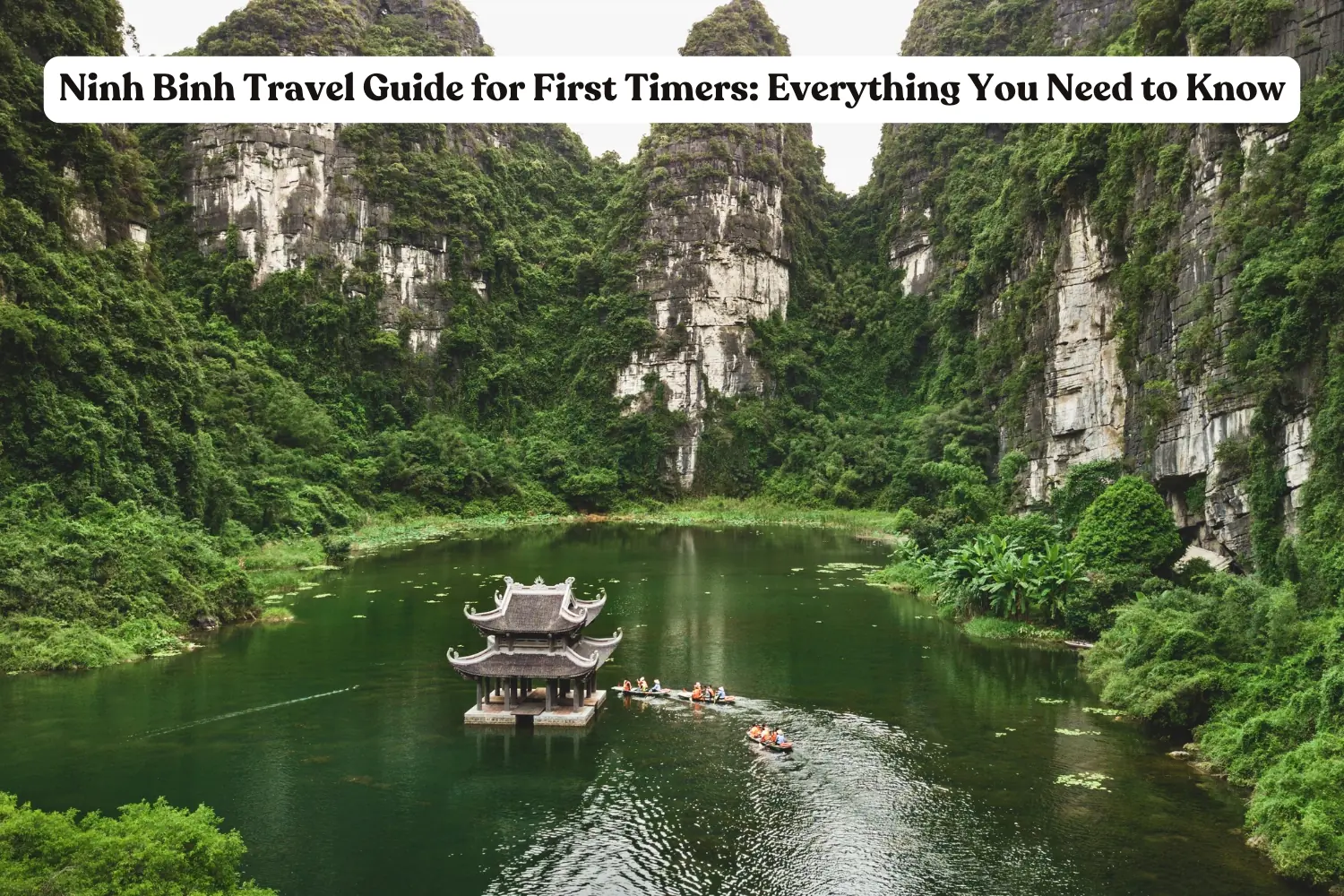
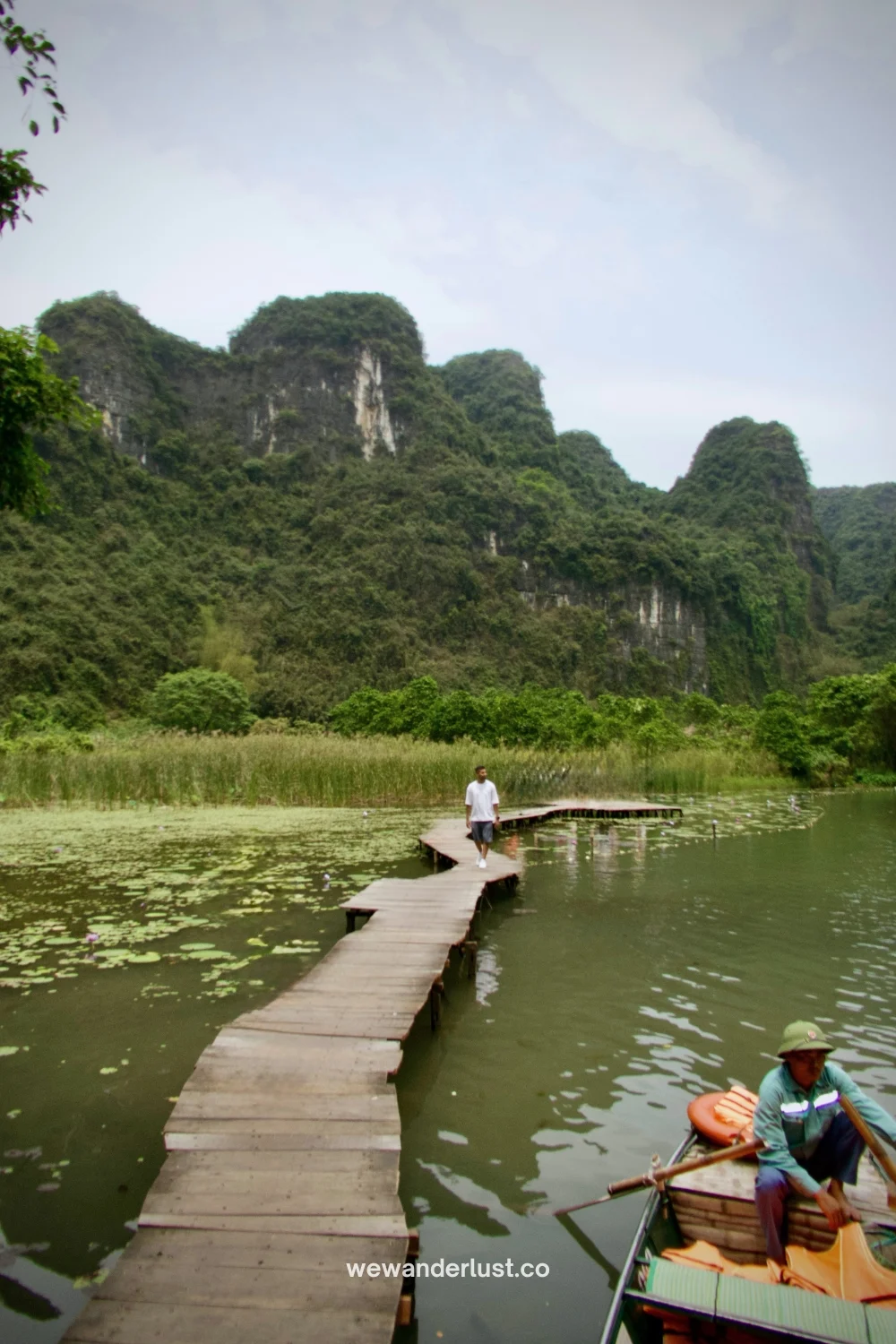
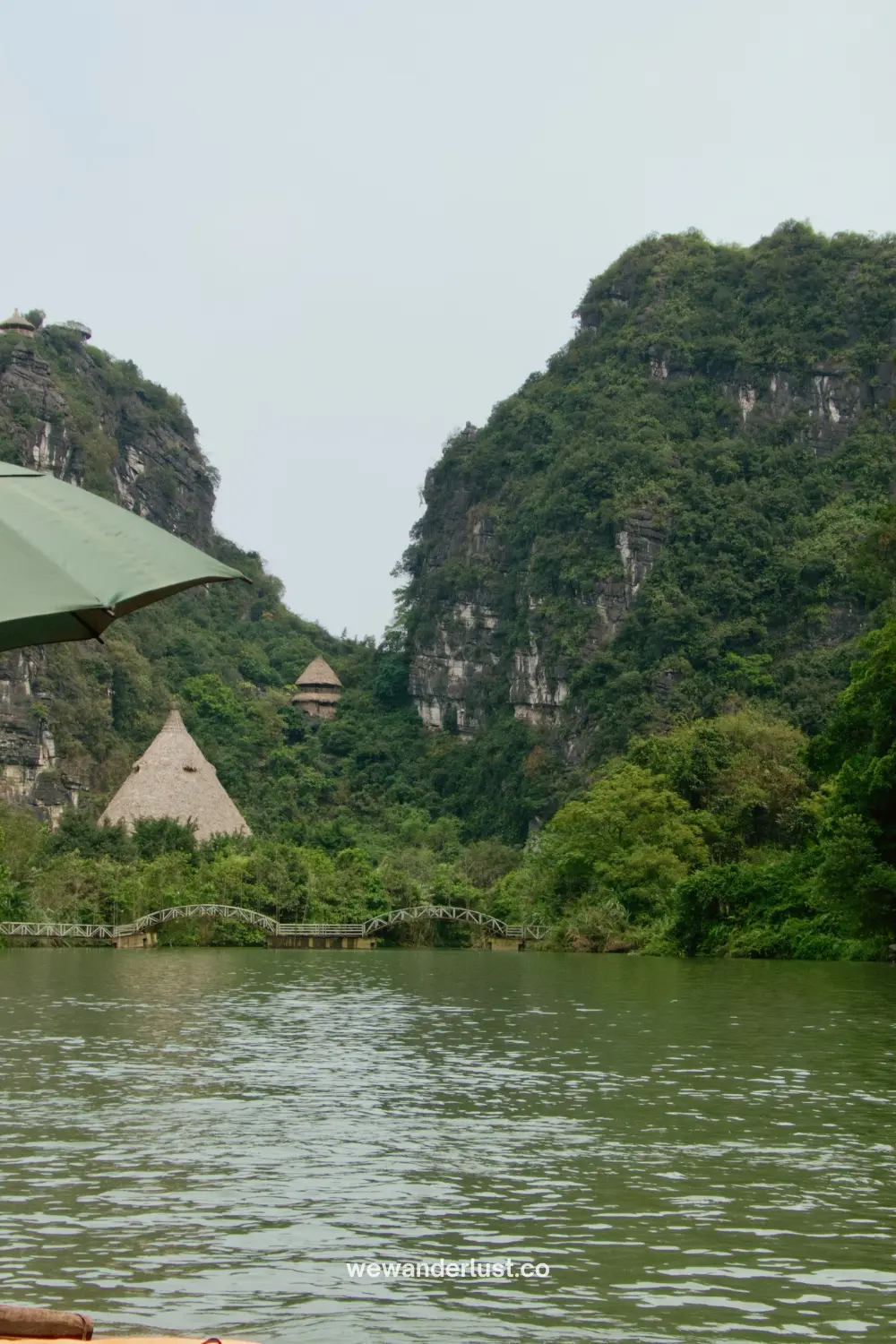
If you have an extra day or two to spare from Hanoi, a day trip to Ninh Binh is one of the best decisions you can make. Often called “Ha Long Bay on land,” Ninh Binh is a region of dramatic limestone karst mountains, winding rivers, ancient temples, and rice paddies that is absolutely breathtaking and one of the most beautiful places we have ever visited.
We actually ended up staying in Ninh Binh for two nights rather than doing it as a day trip, which gave us so much more time to explore properly, and it’s something we’d recommend if you can stretch your itinerary. But even as a day trip from Hanoi it’s well worth doing: the journey takes about two hours by road and the scenery as you arrive is staggering.
💡 We have a full guide coming: Hanoi to Ninh Binh by Luxury Van and Ninh Binh to Hanoi by Luxury Van covering everything you need to know about the journey.
Book Here: Ninh Binh Day Trip from Hanoi
Take a Day Trip to Ha Long Bay (Or Stay for Two Days)
Ha Long Bay is one of those places that has been on the travel world’s radar for decades and still manages to exceed expectations. The bay is made up of thousands of limestone islands and islets rising dramatically from emerald green water, and it’s a UNESCO World Heritage Site for very good reason.
We didn’t make it to Ha Long Bay during this particular trip to Hanoi, but it is top of the list for when we come back. Most visitors do it as a two-day one-night cruise from Hanoi, which is the format we’d recommend over a day trip since Ha Long Bay really deserves to be experienced at night when the day trippers have gone and the bay becomes quiet and magical.
Book Here: Ha Long Bay Day Trip from Hanoi | Ha Long Bay 2-Day Cruise
How to Navigate Hanoi Like a Local
This is the section none of the other Hanoi guides bother to include, and it’s one of the most useful things we can share.
Crossing the road
It’s the thing that intimidates almost every first-time visitor to Hanoi, and understandably so. The traffic is constant and motorbikes seem to come from every direction. The trick is to walk slowly and steadily, make eye contact with drivers to signal your intention, and trust that the flow of traffic will part around you. Don’t stop suddenly and don’t run. It feels counterintuitive but it works, and within a day you’ll be crossing like a local.
Getting around
This is best done on foot in the Old Quarter, which is compact and walkable. For anything further out, Grab is cheap, reliable, and takes all the guesswork out of negotiating prices. We used it for West Lake, Tran Quoc Pagoda, and any time we were tired of walking.
Speaking of making life easier in Vietnam, we have a full guide coming on the Best Apps for Traveling in Vietnam covering everything you need downloaded before you land.
Hanoi by neighborhood
It’s worth thinking about when planning your days. The Old Quarter and Hoan Kiem Lake area are within easy walking distance of each other, so those work well together. West Lake and Tran Quoc Pagoda are a Grab ride north and combine naturally. The Ho Chi Minh Mausoleum, One Pillar Pagoda, and Temple of Literature are all clustered together in the Ba Dinh district and make sense as a half-day trip in one direction.
What to Eat and Drink in Hanoi
Hanoi’s food scene deserves its own guide and we have one as part of our 2 Day Hanoi Itinerary, but a few essentials to know before you go:
Pho
The pho in Hanoi is lighter and more refined than the southern version. Have it for breakfast on a pavement stool.
Fried chicken spring rolls
These are one of those dishes that sounds simple until you actually try one in Hanoi and realize nothing you’ve had before quite compares. The version here, crispy and golden on the outside with a perfectly seasoned filling inside, is one of the best things we ate during our entire trip. You’ll find them at street food stalls all through the Old Quarter and they are absolutely non-negotiable.
Egg coffee
This is non-negotiable. Start at Cafe Giang (the original) and make your way through as many versions as you can while you’re here because every cafe does it slightly differently. We have a full guide of the Best Coffee Shops in Hanoi, Vietnam where we share all our favorite spots across the city.
Banh mi
Banh mi from a street vendor costs almost nothing and is one of the best things you’ll eat anywhere in Southeast Asia.
Vietnamese iced coffee (ca phe sua da)
Ca phe sua da is strong, sweet, and incredibly good. Order it everywhere.
Best Time to Visit Hanoi
Hanoi has a distinct season cycle, which matters when planning your visit. The best months to visit are October through December and March through April, when the weather is cooler, drier, and much more comfortable for exploring on foot.
Summer (May through August) is hot, humid, and rainy, though the city is still very much visitable and the lush greenery is beautiful. January and February can be surprisingly cold and grey, and the week of Tet (Lunar New Year) sees many businesses close and prices spike, so it’s worth checking the dates before booking.
We always lean toward the cooler months for any city exploration, and Hanoi in November or early December is lovely.
FAQs: Things to Do in Hanoi Vietnam
Is Hanoi worth visiting?
Absolutely and completely. Hanoi is one of the most fascinating, layered, and exciting cities we’ve visited in Southeast Asia. The history, the food, the street life, the coffee culture, and the sheer energy of the place make it a destination that deserves more time than most itineraries give it.
How many days do you need in Hanoi?
We’d recommend a minimum of three full days to cover the main sights comfortably, with a fourth day for a day trip to Ninh Binh if your schedule allows. If you have more time, Hanoi rewards slower travel beautifully.
Is Hanoi safe for tourists?
Yes, Hanoi is generally very safe for tourists. The main things to be aware of are the traffic (take your time crossing roads), keeping an eye on your belongings in busy markets, and being a little cautious with cyclo or taxi drivers who haven’t agreed on a price in advance. Using Grab for transport removes most of the guesswork.
What is the best area to stay in Hanoi?
The Old Quarter is the best base for first-time visitors, hands down. You’re within walking distance of Hoan Kiem Lake, Train Street, the French Quarter, and most of the things on this list. We have a full guide coming: Where to Stay in Hanoi, Vietnam.
Is Hanoi expensive?
Hanoi is one of the most affordable major cities in Southeast Asia. Street food costs almost nothing, Grab rides are very cheap, and even mid-range and luxury hotels are significantly cheaper than equivalent properties elsewhere in the region. You can eat and drink exceptionally well here without spending much at all.
What is Hanoi famous for?
Hanoi is famous for its Old Quarter, Hoan Kiem Lake, egg coffee, pho, bun cha, Train Street, water puppet shows, and its rich history as the capital of Vietnam. It’s also the gateway to some of the most spectacular natural scenery in Southeast Asia, including Ha Long Bay and Ninh Binh.
Final Thoughts on Things to Do in Hanoi
If you’re short on time and need to prioritize, start with the Old Quarter and Hoan Kiem Lake since those two areas alone can fill a full and incredibly satisfying day. Add Train Street and egg coffee at Cafe Giang, wander down Phung Hung Mural Street, and find your way to Phan Dinh Phung Street in the late afternoon. Then plan a day for Tran Quoc Pagoda and West Lake, and if you can possibly stretch your itinerary, go to Ninh Binh. You’ll thank yourself.
Hanoi is the kind of city that makes you want to come back before you’ve even left, and we are already looking forward to our next visit to finally tick off the Water Puppet Show, the Temple of Literature, and Ha Long Bay. If this guide helped you plan your trip, enjoy every minute of it.
Happy wandering!